
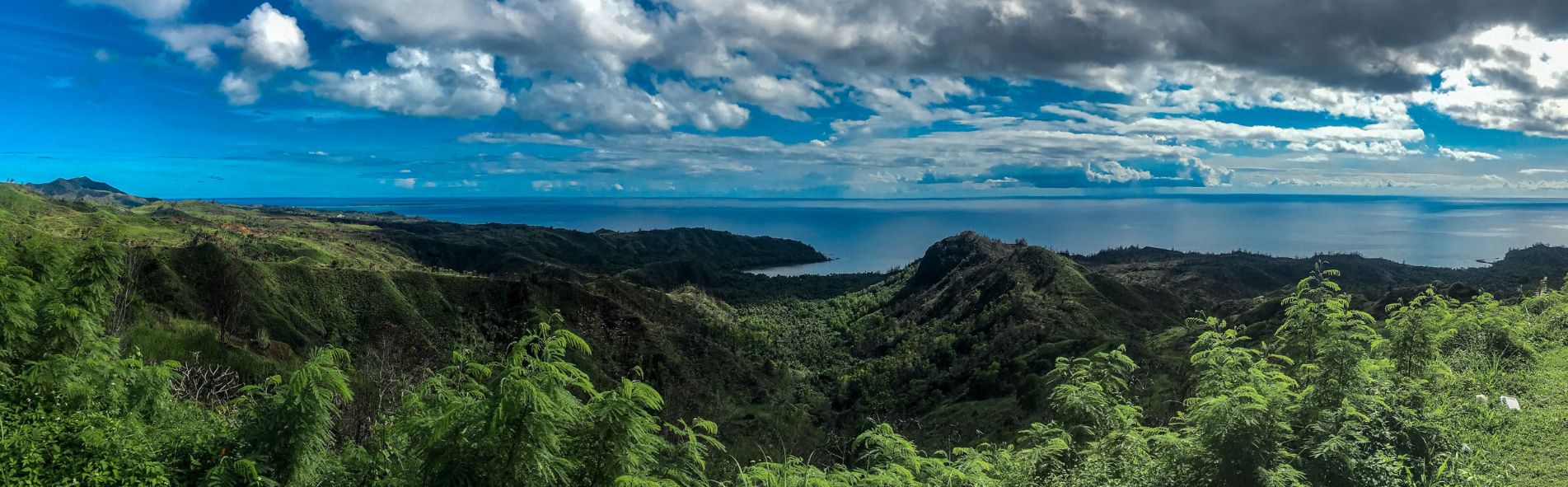
Department of the Air Force v. Prutehi Guåhan
STATUS: Active — Oral argument scheduled October 7, 2026.
COURT: U.S. Supreme Court
OVERVIEW
The U.S. Supreme Court will soon hear Department of the Air Force v. Prutehi Guåhan, a case that highlights the link between environmental justice, democracy, and self-determination in U.S. territories. The Court will review a Ninth Circuit decision requiring the U.S. Air Force to conduct additional environmental review and allow for community participation before deciding to conduct open detonation of hazardous materials at Tarague Beach at Andersen Air Force Base in Guam—a U.S. territory where over one-quarter of the island remains under U.S. military control.
The Air Force has conducted munition disposal operations at Tarague Beach since 1982. Its most recent permit, issued in 2018, expired in September 2021. After deciding to continue operations, the Air Force submitted a permit renewal application in May 2021; Guam EPA has not yet issued a decision, and the Air Force has continued detonating munitions under the terms of its prior permit for more than four additional years.
Prutehi Guåhan, a Guam-based organization dedicated to protecting the island's natural and cultural resources, filed suit against the Air Force in January 2022. The Ninth Circuit ruled in its favor in February 2025. Prutehi Guåhan is represented by Earthjustice; it argues the Air Force's submission of the 2021 permit-renewal application violated the National Environmental Policy Act (NEPA) because it failed to complete an Environmental Impact Statement or Environmental Assessment before submitting its permit renewal application.
The Air Force's disposal operations sit above Guam's sole-source aquifer, which supplies drinking water to more than 80% of the island's population. Local residents recreate on Tarague Beach and fish offshore; nearby communities harvest traditional medicines; and the beach is habitat for endangered green sea turtles and migratory seabirds. The operations release contaminants into the air, spilled fuel may reach surrounding beach areas, and hazardous waste effluents may infiltrate the aquifer beneath the detonation range.
Right to Democracy filed an amicus brief before the U.S. Supreme Court on behalf of eighteen community-based organizations from across the five U.S. territories. Curtis, Mallet-Prevost, Colt & Mosle LLP served as co-counsel. The amicus brief provides the Court context on how a decision in this case will affect people living under colonial governance across the territories.
WHY THIS CASE MATTERS
Residents of Guam—like those of Puerto Rico, the U.S. Virgin Islands, American Samoa, and the Northern Mariana Islands—are subject to unilateral federal actions that threaten their lands, waters, and communities, while at the same time being denied even basic political rights. They cannot vote for the President who commands the U.S. Air Force and other federal entities, hold no voting representation in Congress, and their right to self-determination under international law remains unrealized.
For the more than 3.6 million residents of the territories, NEPA's public-engagement process is essential for influencing federal decisions that affect their lives, lands, and future generations. These mechanisms would allow Guam EPA to take an informed decision alongside more meaningful public input. Given that residents of the territories are denied political rights, public participation afforded by NEPA becomes their only avenue for democratic participation. Thus, eliminating the environmental information required for meaningful public participation removes one of the few legal mechanisms through which residents of Guam can exercise any democratic agency over otherwise unilateral federal actions.
VOICES FROM THE CASE
-
Maria Hernandez, Co-Executive Director, Micronesia Climate Change Alliance (Guam/NMI) — “This case is merely the most recent example of how the legacy of military contamination continues to affect communities across Guam and other territories... The ongoing risk of contamination to Guam's Northern Lens Aquifer, the island's primary source of drinking water, underscores the far-reaching consequences of military activities and the urgent need for stronger environmental protections and public accountability.”
-
Neil Weare, Co-Director, Right to Democracy — “We are proud to represent community organizations in the territories to make the case that when the U.S. military is developing plans to dispose of explosives and other toxic materials, it must seek public input and conduct environmental studies before any decisions are made. The Air Force argument that less ecological and community review are required when it disposes of hazardous waste than when it builds roads or warehouses defies not just federal law, but common sense.”
-
Adi Martínez-Roman, Co-Director, Right to Democracy — “The federal government continues to deny people in the territories their basic political rights and self-determination. NEPA's public participation process is one of the only mechanisms local communities have for influencing federal decisions that affect their lives and lands.”
-
Dr. Steven Mana'oakamai Johnson, Acting President, Tåno, Tåsi, yan Todu (NMI/Guam) — “Our communities are not only held accountable to the law, we are also held accountable to the land, water, and air. Efforts to sidestep this process are not only undemocratic, but they are also disrespectful of cultural, relational, and ethical principles.”
-
Dulce María del Río-Pineda, Co-Founder & Organizational Coordinator, Mujeres de Islas (Puerto Rico) — “This case has sweeping implications for advocates of the environment and self-determination across the territories and the United States, especially as the U.S. military once again expands its activities in Puerto Rico.”
-
Hadiya Sewer, President and Co-Founder, St. JanCo (U.S. Virgin Islands) — “We in the U.S. Virgin Islands are no strangers to federal control and federal actions that impact our land and people. We support our territorial family members in Guam in this fight to ensure we all have a voice and say in the decisions that affect our communities.”
-
Sabrina Suluai-Mahuka, Founder and Chair, Finafinau (American Samoa) — “The public participation afforded by NEPA is critical to people in the territories. This isn't just about one project. It's about protecting the public's right to be heard before decisions with lasting consequences are made, especially as the federal government considers other extractive activities like deep-sea mining in our islands.”
The full list of amici includes:
Marianas (Guam & NMI)
-
Micronesia Climate Change Alliance (MCCA)
-
Tåno, Tåsi, Yan Todu
-
Birthworkers of Color Collective
-
Guåhan Sustainable Culture
-
Friends of the Marianas Trench
-
Refaluwasch Journal of Knowledge and Culture
-
URAALI Refaluwasch Association
Puerto Rico
-
Amigxs del M.A.R.
-
El Puente Puerto Rico
-
FURIA, Inc.
-
Mujeres de Islas
-
Resiliency Law Center
U.S. Virgin Islands
-
St. Croix Environmental Association
-
St. JanCo: The St. John Heritage Collective
-
Virgin Islands Institute for Social Impact, Opulence, and Noetics, Inc. (VIISION)
American Samoa
-
Finafinau
-
Pacific Global Citizens Inc.
-
Puipui Measina A Amerika Samoa
CASE MATERIALS (SUPREME COURT)
CASE UPDATES
Community Organizations Urge U.S. Supreme Court to Not Let Air Force Sidestep Environmental Review and Public Participation, Right to Democracy, August 4, 2026
U.S. Supreme Court Takes Up Case Addressing Open Burning and Detonation by U.S. Military in Guam, Right to Democracy, March 12, 2026
NEWS COVERAGE
-
Katie Aizon, Trump signs two new executive orders, U.S. Air Force v. Prutehi Guahan heads to Supreme Court, Marianas Business Journal, August 11, 2026
-
Public Radio Guam, Supreme Court will hear burn pit arguments Oct. 7, August 7, 2026
-
The St. Thomas Source, Environmental Groups From Five U.S. Territories Back Guam Case Before Supreme Court, August 4, 2026.
-
Walter Ulloa, Advocacy group blasts SCOTUS decision to hear Andersen case, The Guam Daily Post, March 17, 2026
ADDITIONAL RESOURCES
Do you like this page?