


A NEW APPROACH
Right to Democracy is a project co-founded by Adi Martínez Román and Neil Weare that seeks to overcome historic obstacles to change through a new approach that unites rather than divides. We aim to build a real movement focused on confronting and dismantling the undemocratic colonial framework governing people in U.S. territories.

Adi Martínez-Román grew up and lives in Puerto Rico, and is the Co-founder and Co-Director of Right to Democracy, which works to advance democracy, equity, and self-determination in U.S. territories. She has focused her career on community empowerment, founding Firmes, Unidos y Resilientes con la Abogacía (FURIA) and co-founding the University of Puerto Rico’s Resiliency Law Center (RLC), which support the advocacy efforts of Puerto Rican community leaders and organizations. Currently, she is a commissioner of the Puerto Rico Civil Rights Commission and serves in several non-profit’s boards of directors. She previously served as the Executive Director of the Access to Justice Fund Foundation and Senior Policy Analyst at Oxfam America. She served as the Assistant Dean of Students at the University of Puerto Rico Law School for seven years, where she continues to teach courses on the intersection of colonial rule, climate justice, and race.
Adi received her bachelor's degree from Princeton’s School of Public Policy and International Affairs, her Juris Doctorate from the University of Puerto Rico, and both a Masters of Law and Doctorate of Jurisprudence from the Instituto Bartolomé de las Casas at Universidad Carlos III of Madrid (Spain).

Neil Weare grew up in Guam and is the Co-founder and Co-Director of Right to Democracy, which works to advance democracy, equity, and self-determination in U.S. territories. As a civil rights attorney, he has led efforts to overrule the Insular Cases and the colonial legal framework they established. Prior to attending Yale Law School, he worked for Guam’s non-voting delegate to the U.S. House of Representatives and in the Guam Legislature. He is the co-author of the casebook Law of U.S. Territories, which he has taught at Yale and Columbia Law Schools. His writing has appeared in the New York Times, SCOTUSblog, the Harvard Law Review, the Yale Law Journal, and more. He represented Guam in the 2004 Athens Olympics. He now lives with his family in Grand Rapids, Michigan.
Neil received his Juris Doctorate from Yale Law School, his Bachelor of Arts in International Affairs from Lewis and Clark College, and clerked for then-Alaska Supreme Court Justice Morgan Christen, who currently serves on the U.S. Court of Appeals for the Ninth Circuit.

OUR VALUES
The strength of Right to Democracy’s new approach is grounded in the values it centers as part of all its work.
-
We Build Common Ground by working collectively with people from diverse perspectives to improve understanding, co-create new meanings, and leverage collective power to achieve a common objective.
-
We Respect Differences by listening with an open mind, empathizing with lived experiences, acknowledging power dynamics, and treating everyone with dignity.
-
We Provoke Change through strategies that demand increased engagement, action, and accountability.
-
We Stay Focused on our mission by leveraging our collective knowledge and experiences to address system-level challenges.
- We Avoid Toxicity through an approach that focuses on working together in good faith, shifts away from zero-sum politics, and centers on our shared goals.

OUR GOALS
Right to Democracy’s values are also reflected in the goals it is focused on achieving.
-
Bring about a reckoning to address 125 years of colonialism and undemocratic governance in U.S. territories.
-
Overrule the Insular Cases and dismantle the racist colonial framework they established in order to advance self-determination and equality for the 3.6 million people living in U.S. territories.
-
Build a coalition that unites rather than divides each of the five U.S. territories by bridging differences between people who disagree on political status or politics to find common ground.
-
Ensure the United States commitments to democratic principles and international law are achieved in U.S. territories by making decolonization a mainstream issue that demands action.
-
Center diversity as a strength in everything we do by co-creating meaning together.

WHAT DOES OUR NAME MEAN
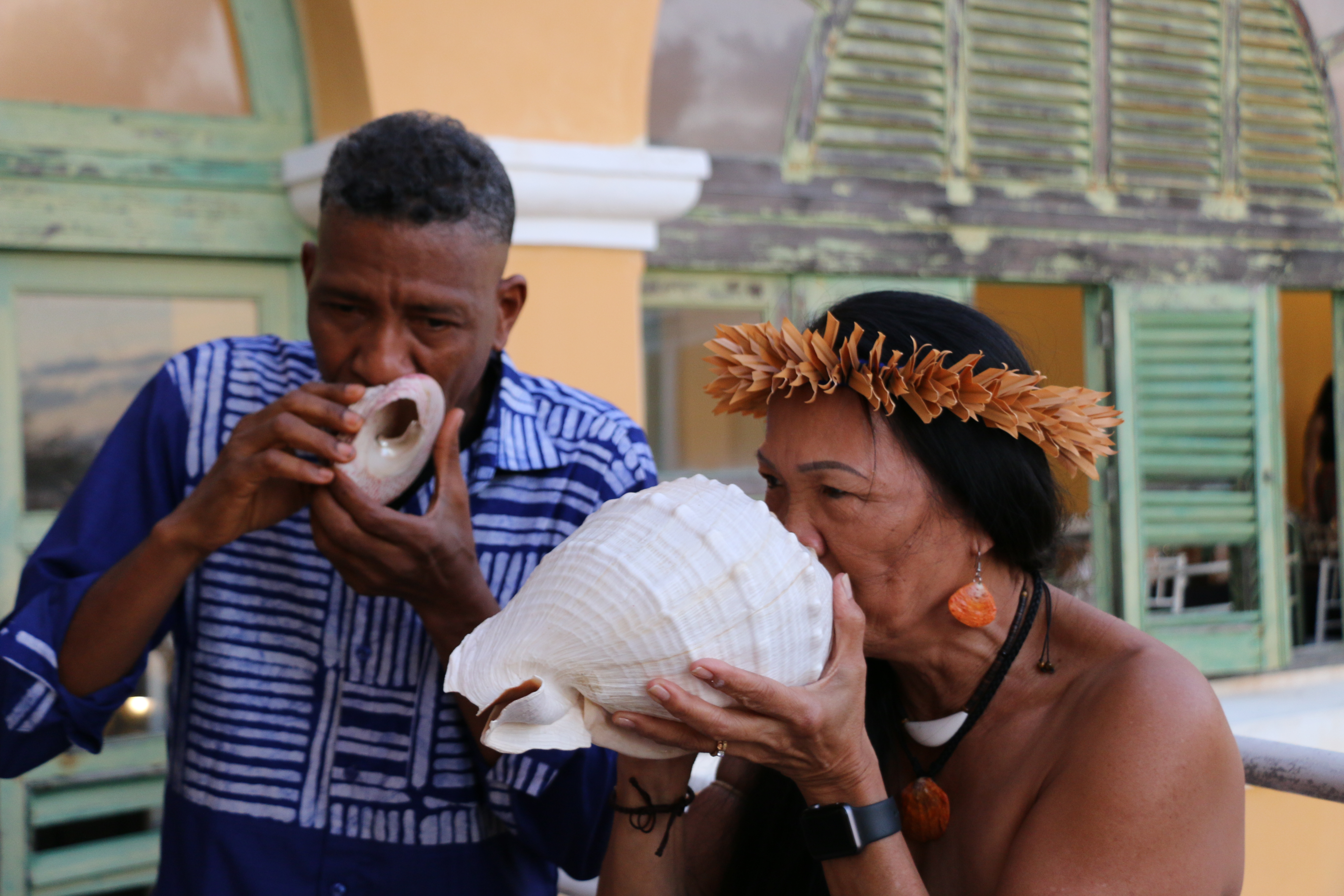
Right to Democracy is a name that presents two reinforcing ideas.
On one level, our name centers the idea that everyone has a basic right to democracy, and that a right to democracy can mean different things to different people.
For example, a Right to Democracy in U.S. territories could mean:
-
a right to decide the laws one must follow
-
a right to develop one’s economy and infrastructure
-
a right to defend one’s culture and identify
-
a right to decolonization
-
a right to demand justice and equality
-
a right to determine one’s own destiny
-
a right to defend one’s land and environment
We want to hear what you think a right to democracy means - please take a moment to complete a short survey here.
At another level, our name focuses on the importance of getting right to democracy, or put another way, getting straight to democracy. Many of the most pressing issues facing people in U.S. territories are directly connected to the lack of political power and self-determination in these communities. We believe Right to Democracy can be most impactful by addressing the systemic colonial structures that underlie these issues. Achieving this kind of structural and systemic change is a long-term project that we believe is a necessary complement to the critical work other organizations are doing to make progress today within the constraints of the current undemocratic framework.
TEAM
BOARD OF DIRECTORS
ADVISORY BOARD
Adi Martínez Román
Adi Martínez-Román has nearly two decades of experience working in community legal aid and empowerment. She is the President of the Board of Director of the Resiliency Law Center (RLC) and the Founder Director of the non-profit organization, FURIA, Inc., which focuses on empowering community leaders through participatory advocacy. Adi began working as and advocate for climate resiliency in 2017 as the Executive Director of the Access to Justice Fund Foundation, where she led efforts to increase access to civil legal services for the impoverished, then as Senior Policy Analyst in Oxfam American, and as Director of the RLC.
Before her work in the resiliency sector, Adi served as the Assistant Dean of Students at the University of Puerto Rico Law School for seven years, where she also taught courses on the Legal Profession, Law and Poverty, and Law and Social Change. She has been part of several boards, including the Board of Directors of Puerto Rico Legal Services Corporation, where she held the position of President for a year and a half.
She holds a bachelor's degree from Princeton's Woodrow Wilson School of Public Policy and International Affairs, a law degree from the University of Puerto Rico, and both a Masters of Law and Doctorate of Jurisprudence from the Instituto Bartolomé de las Casas at Universidad Carlos III of Madrid (Spain).
Co-Director Statement
My identity as a Boricua from colonized Puerto Rico is not just a personal fact; it is the foundation of my leadership. I navigate the same conundrums as my constituents—the invisibility of our reality and the struggle for agency within frameworks created by others. I do not "serve" from a distance. I stand within the experience of colonial disenfranchisement, which allows me to see the people I serve because I am one of them.
To cultivate even more proximity, I reject top-down models, grounding my practice in solidarity. In RtD, we have developed a Cross-Territorial Solidarity Advocacy Framework: an iterative process of listening, shared knowledge production, and collective reflection. We do not assume we have the answers; we create spaces where the answers emerge from the communities themselves. Through the Cross-Territorial Coalition, we maintain continuous feedback loops. I ensure these spaces are not merely consultative, but environments where territorial residents are the architects of our advocacy strategies.
This proximity directly transforms how I advance access and opportunity. By embedding ourselves in the lived reality of these communities, we are able to identify and dismantle the specific mechanisms of colonial rule that remain invisible to many observers. This closeness ensures that our advocacy is not just a strategic exercise, but a tool for community empowerment. When we challenge the Insular Cases, we do so not as detached lawyers, but as partners executing a strategy co-designed by those whose citizenship and rights are at stake.
My leadership is defined by this refusal to distance myself from the struggle and its people. In fact, the spaces we’ve created have produced relationships that go beyond political strategy - we now have a cross-territorial family that supports each other, cries and laughs together, and is in constant vigilance and solidarity together. By anchoring our programmatic evolution in the direct participation of our constituents, we turn their lived wisdom into the engine of a solidarity movement. This is how we move beyond charity toward true self-determination—by ensuring that the people impacted by colonial power are the ones who ultimately reclaim it.
Neil Weare, President
Neil Weare is a legal expert with a focus on the law of U.S. territories, having been raised in Guam and working for Guam's non-voting Member of Congress before attending Yale Law School. He is the co-author of the forthcoming casebook "Law of U.S Territories," which he has taught at both Yale and Columbia.
Neil has extensive legal experience, having worked as an associate at Loeb & Loeb LLP and Trister, Ross, Schadler & Gold, PLLC, advising non-profit organizations on a wide range of legal compliance issues. He also served as Litigation Counsel and Supreme Court Fellow at the Constitutional Accountability Center and clerked on the Alaska Supreme Court for Justice Morgan Christen, now a Judge on the Ninth Circuit.
During his time as a law student, Neil successfully argued CCJEF v. Rell, a landmark case before the Connecticut Supreme Court that recognized a right to adequate education for Connecticut schoolchildren. His commentary on various legal issues has appeared in the New York Times, CNN.com, Slate.com, and other media outlets. In addition to his legal accomplishments, Neil competed in the 2004 Athens Olympics. He holds a bachelor's degree in International Affairs from Lewis & Clark College.
Co-Director Statement
Growing up in Guam, my connection to the island and its people is the starting point of my identity and the engine of my leadership. Representing Guam in the 2004 Athens Olympics was one of the proudest moments of my life, but it also crystallized a painful contradiction: I could run for my country on the world stage, yet back home, my community and I had no vote for the President or voting representation in Congress. This personal experience of second-class citizenship shaped a conviction that has guided my entire professional life: the U.S. colonial framework must be dismantled.
Every step of my career has been a deliberate preparation for this struggle. Before law school, I worked inside Guam's legislature and for Guam's non-voting delegate in Congress to understand how federal power impacts our daily lives. I then went to Yale Law School specifically to acquire the constitutional tools needed to challenge the racist Insular Cases. After clerking on the Alaska Supreme Court and serving as a Supreme Court Fellow, I spent more than a decade as a civil rights attorney leading federal litigation to secure voting rights and birthright citizenship for territorial residents.
Yet, I learned that you cannot solve these problems from a distance. Litigating in Washington, D.C. is hollow without deep community roots. In 2013, I founded Equally American, and now, co-founding Right to Democracy alongside Adi represents the evolution of this proximity. I maintain proximity by conducting listening tours, holding community dialogues, and employing community lawyering. We do not hand down legal strategies from on high; we co-design our litigation with plaintiffs and local partners across all five territories. My professional development has not been about climbing a career ladder—it has been a singular, life-long dedication to ensuring that my home and all U.S. territories finally secure the power and agency they deserve.
Do you like this page?