

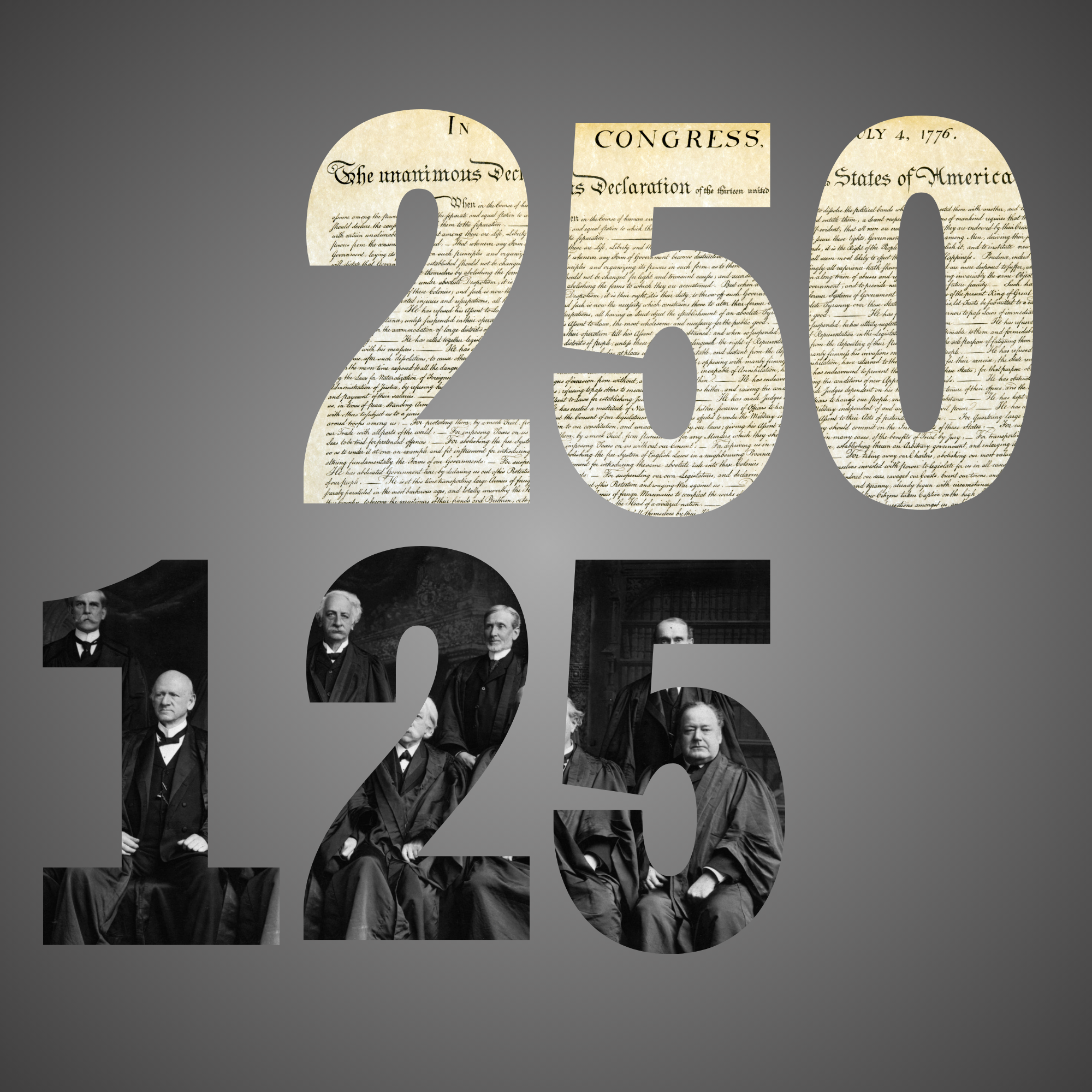
250 Years of "Consent of the Governed," 125 Years of Colonial Rule
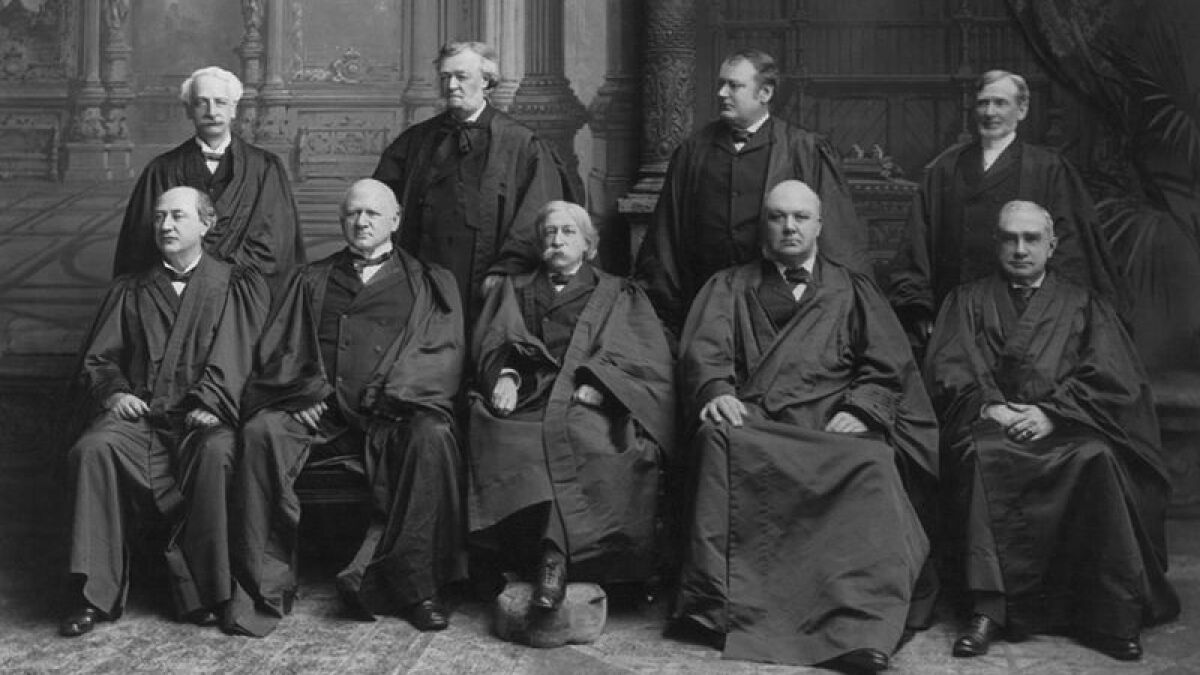
In 2026, two anniversaries intersect. The year marks 250 years since the Declaration of Independence, when the United States rejected colonial rule and declared that governments derive their just power from the “consent of the governed”.
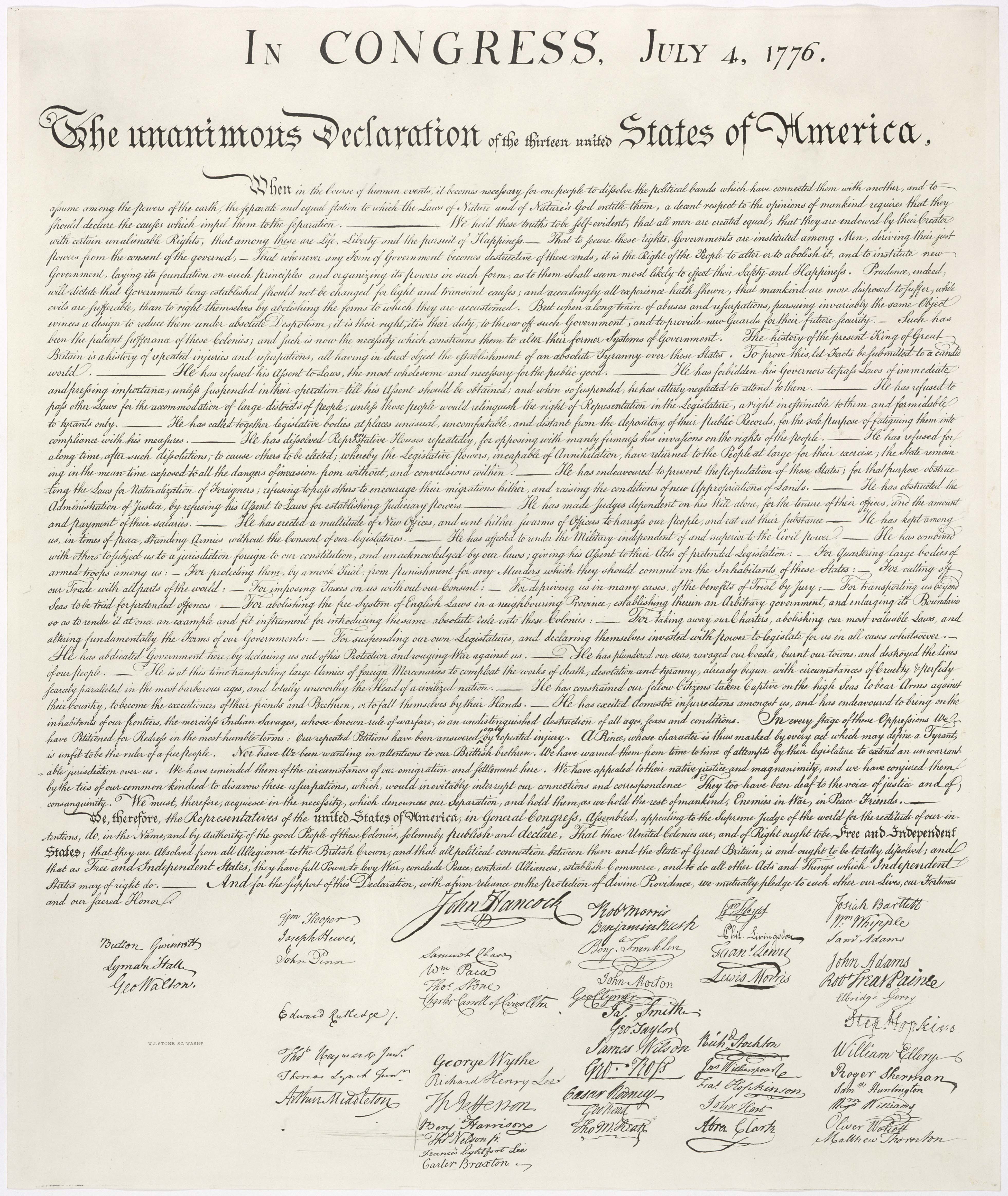 It also marks 125 years since the first of the Insular Cases, a series of Supreme Court decisions that created the legal category of “unincorporated territories.” These rulings permitted the United States to govern territories differently from states, without the full protections of the Constitution or full participation in the federal political system.
Putting these two anniversaries side by side highlights a contradiction that persists today. The United States was founded upon the rejection of colonial rule. Yet, millions of people in Puerto Rico, Guam, the U.S. Virgin Islands, American Samoa, and the Northern Mariana Islands continue to live under a legal framework established during the height of American colonial expansion.
 Through the 250/125 Campaign, we seek to create opportunities for learning and connection around these issues. Throughout the year, we will host virtual dialogues and community conversations that bring together people from across the territories and the diaspora. We will also share educational content on social media as part of the campaign. This content will include posts explaining the Insular Cases, highlighting the experiences of people in the territories, and recognizing anniversaries connected to each territory’s history.
We encourage you to follow our social media channels and share the content with your networks. Helping more people learn about these issues is an important step toward building broader awareness. Plus, you can find shareable graphics in our social media toolkit to share on your own platforms.
250/125 Campaign Statement
Prelude: Bad Bunny, Good Questions
Our “Bad Bunny, Good Questions” campaign sparked conversations about colonial rule and the meaning of "America" that served to introduce this year's 250/125 Campaign. Controversy and debate over Bad Bunny’s Super Bowl halftime performance became a moment of national attention in which to ask very important questions: What does it mean to be “American” when you come from a U.S. territory? By using the cultural moment to highlight the lived experience of over 3 million people in U.S. territories, the campaign helped introduce wider audiences to the realities of U.S. colonial rule today.
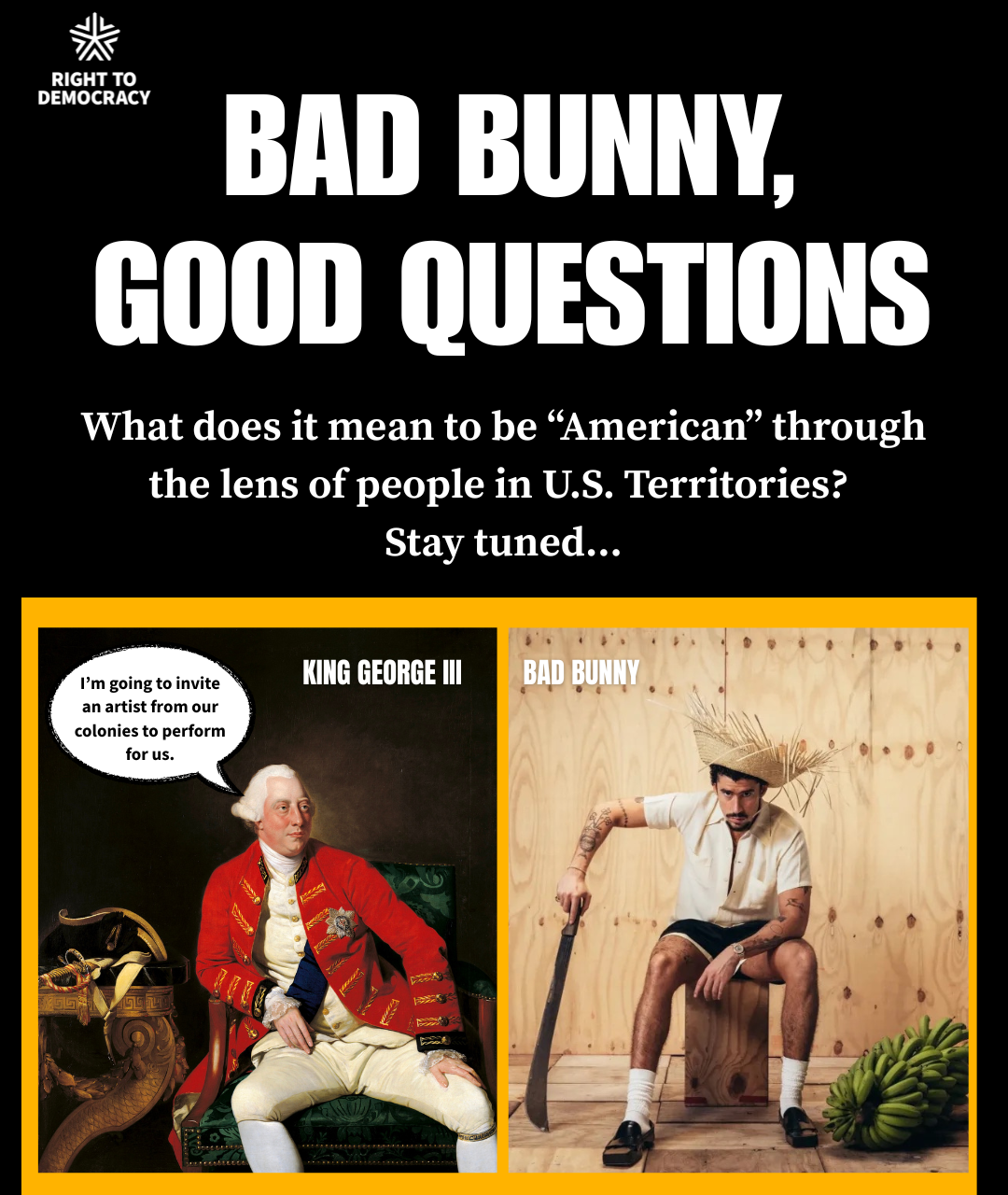
Those conversations made clear that what many people see as a historical issue is in fact a present-day one. This realization sets the stage for the 250/125 Campaign, which connects two milestones in U.S. history to highlight an ongoing contradiction. Colonial Rule is a now problem.
Grievances Pamphlet: From the 13 Colonies to the U.S. Colonies today
(English Version)
(Spanish Version)
Want to learn more?
Check out our list of resources here!
Fill out our survey here!
Do you like this page?