
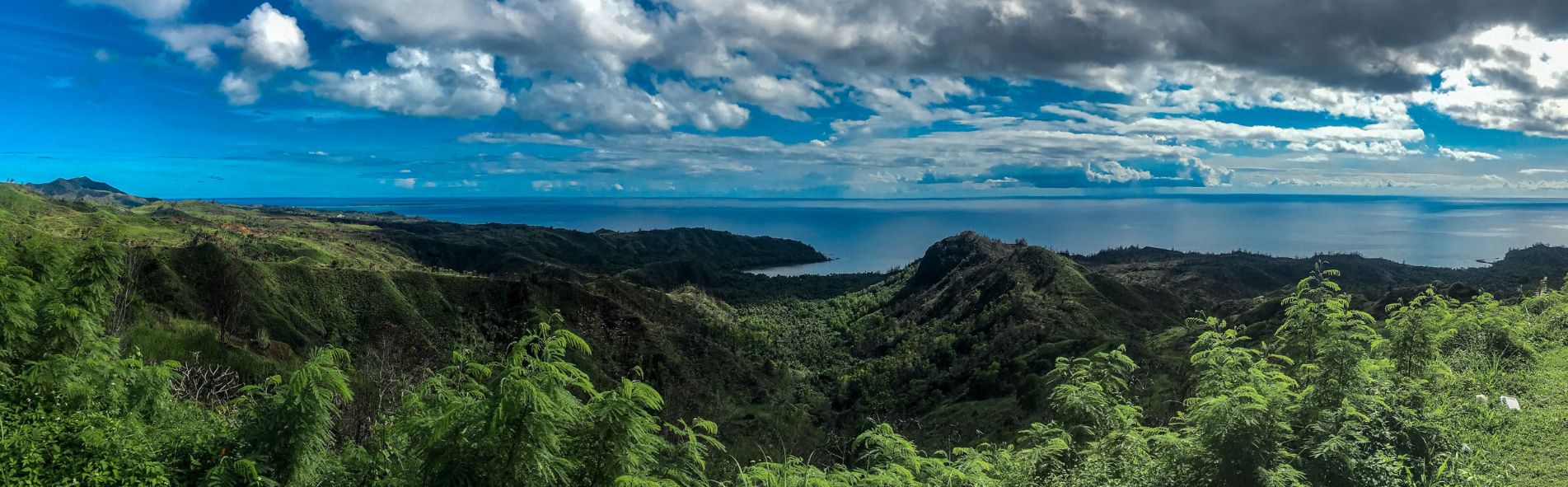
Environment & Democracy Fellowship

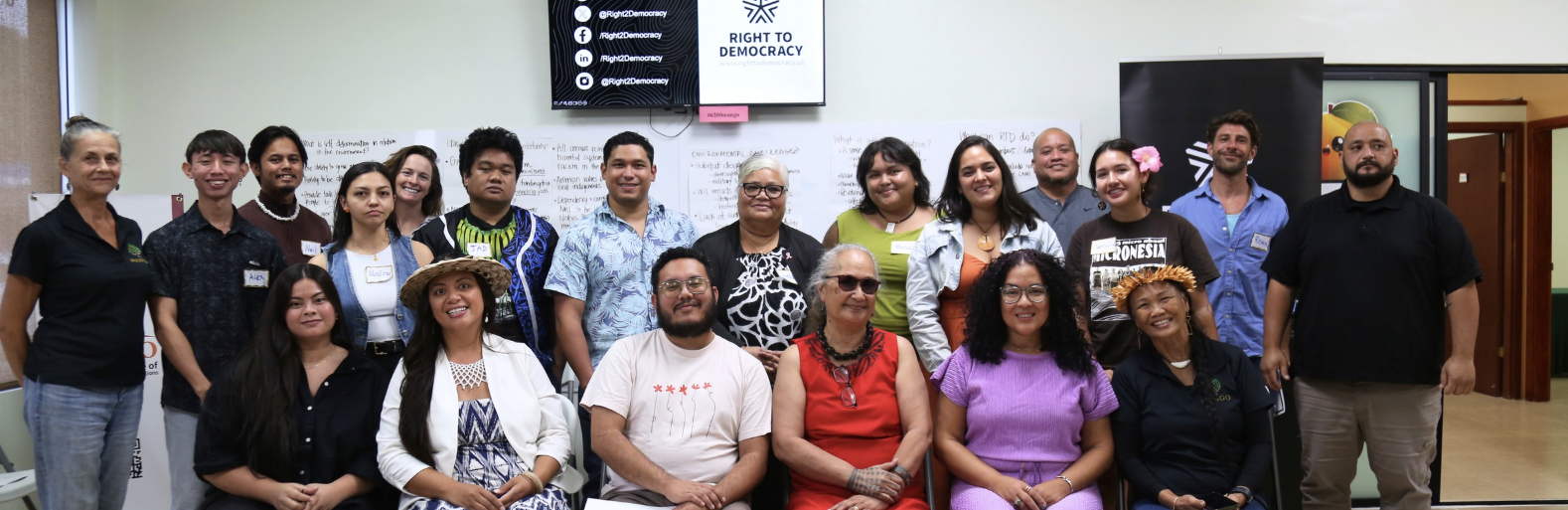
Photo: Participants of Right to Democracy’s Summit on U.S. Colonialism convened in St. Croix, U.S. Virgin Islands.
The Right to Democracy Environmental & Democracy Fellowship is an initiative rooted in the understanding that environmental justice in the U.S. territories cannot be separated from the ongoing realities of colonial rule and democratic denial. The fellowship supports local leaders from each of the five U.S. territories, as well as one Cross-Territorial Fellow, who will all work across geographies to advance environmental advocacy that centers self-determination and equity. In territories like Puerto Rico, Guam, American Samoa, the U.S. Virgin Islands, and the Northern Mariana Islands, climate change is not a distant threat; it is a lived reality. Solutions that are imposed without territorial input often fail to reflect local wisdom or protect island ecosystems. The Environmental & Democracy Fellowship is designed to shift this paradigm by supporting community-rooted strategies for lasting, systemic change.
Meet Our Fellows
The inaugural cohort is composed of six amazing women leaders: one from each of the five U.S. territories and one Cross-Territorial Fellow. Each fellow brings expertise, networking capacity, and energy to build common ground and uplift the work being done in each territory.


Their Work Across the Territories
Community Engagement
Right to Democracy fellows have organized various listening sessions throughout the territories to hear firsthand from community leaders on what they believe are the biggest environmental issues affecting their daily lives. They have successfully led these events in each territory over the last year, ensuring both young and older audiences are being heard.
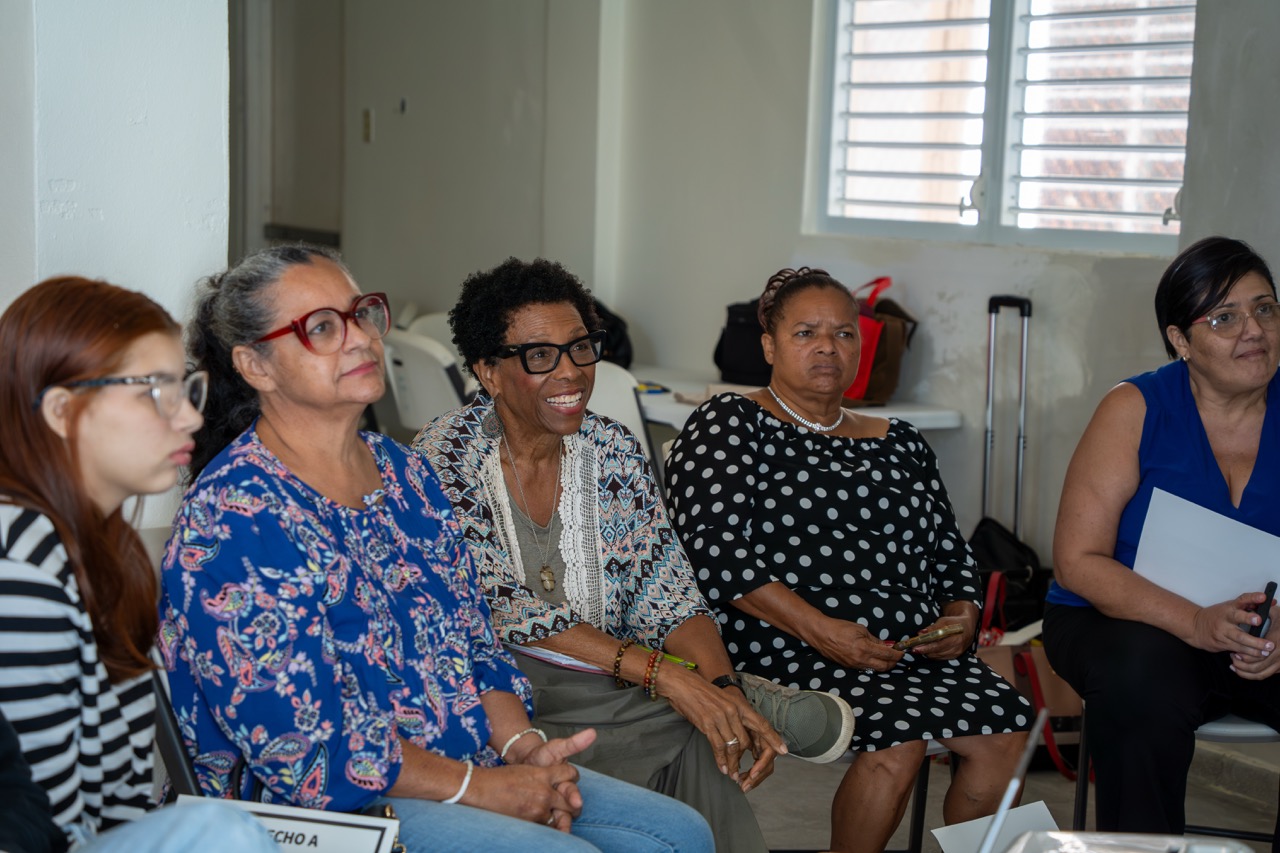
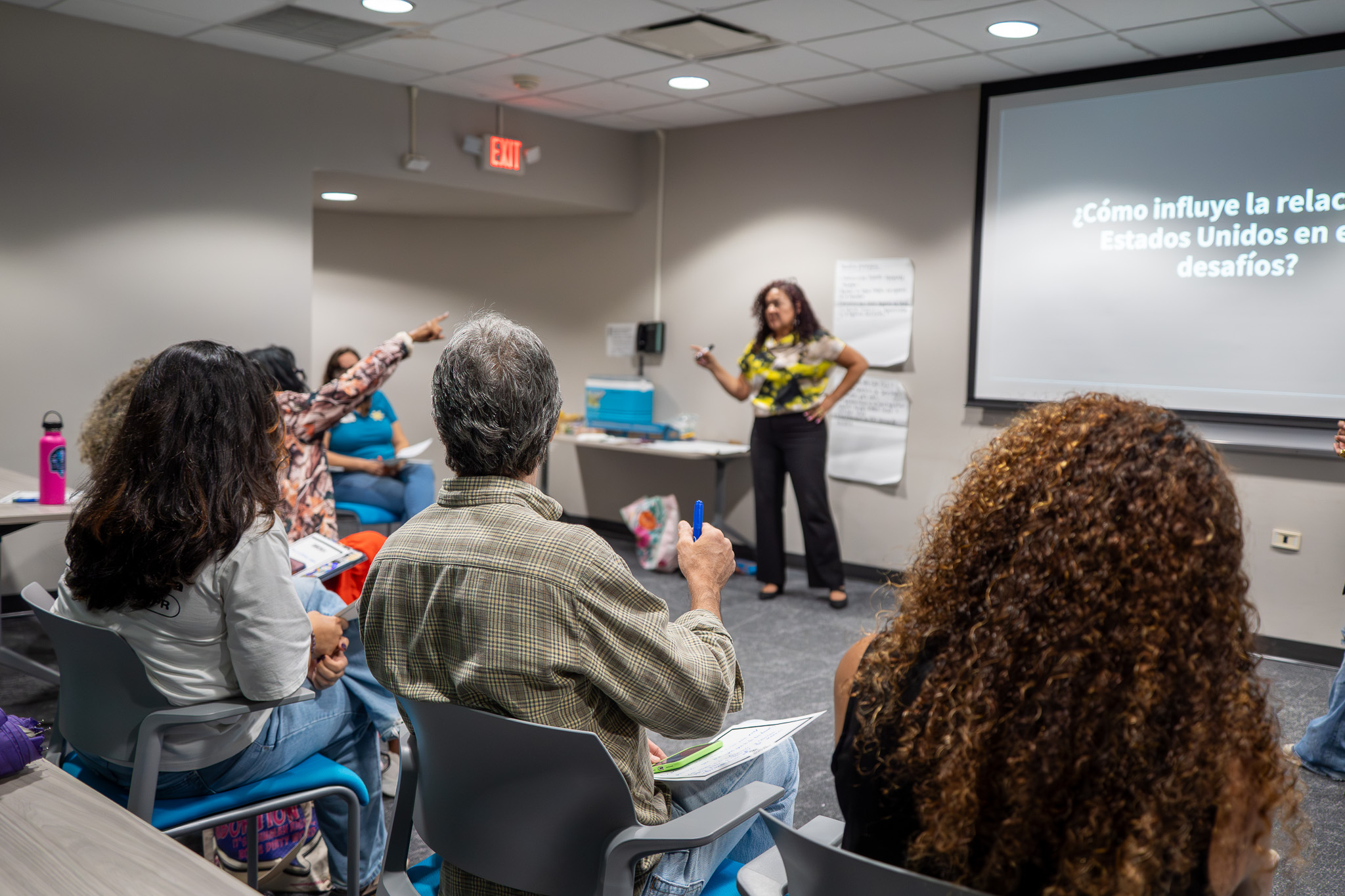
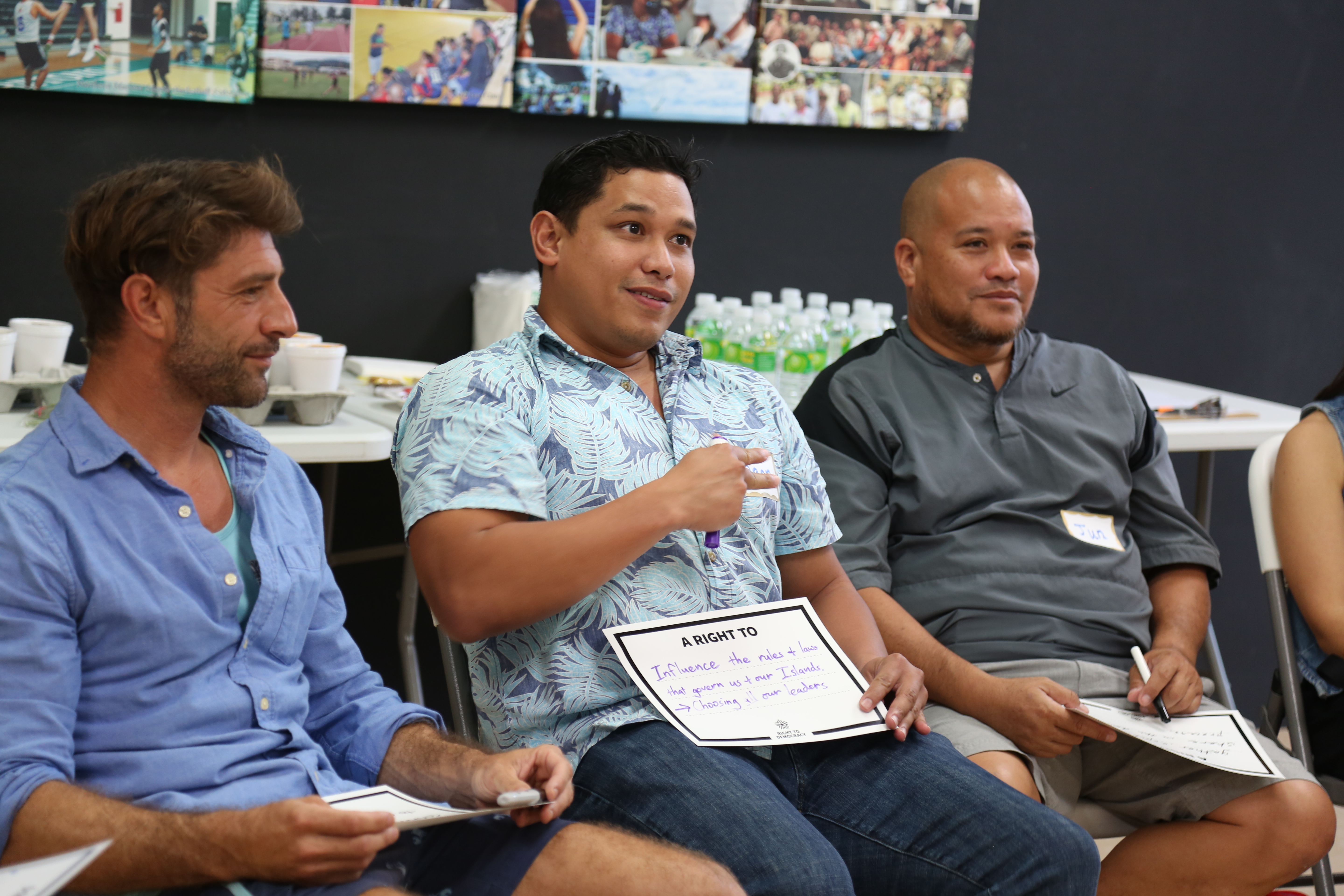
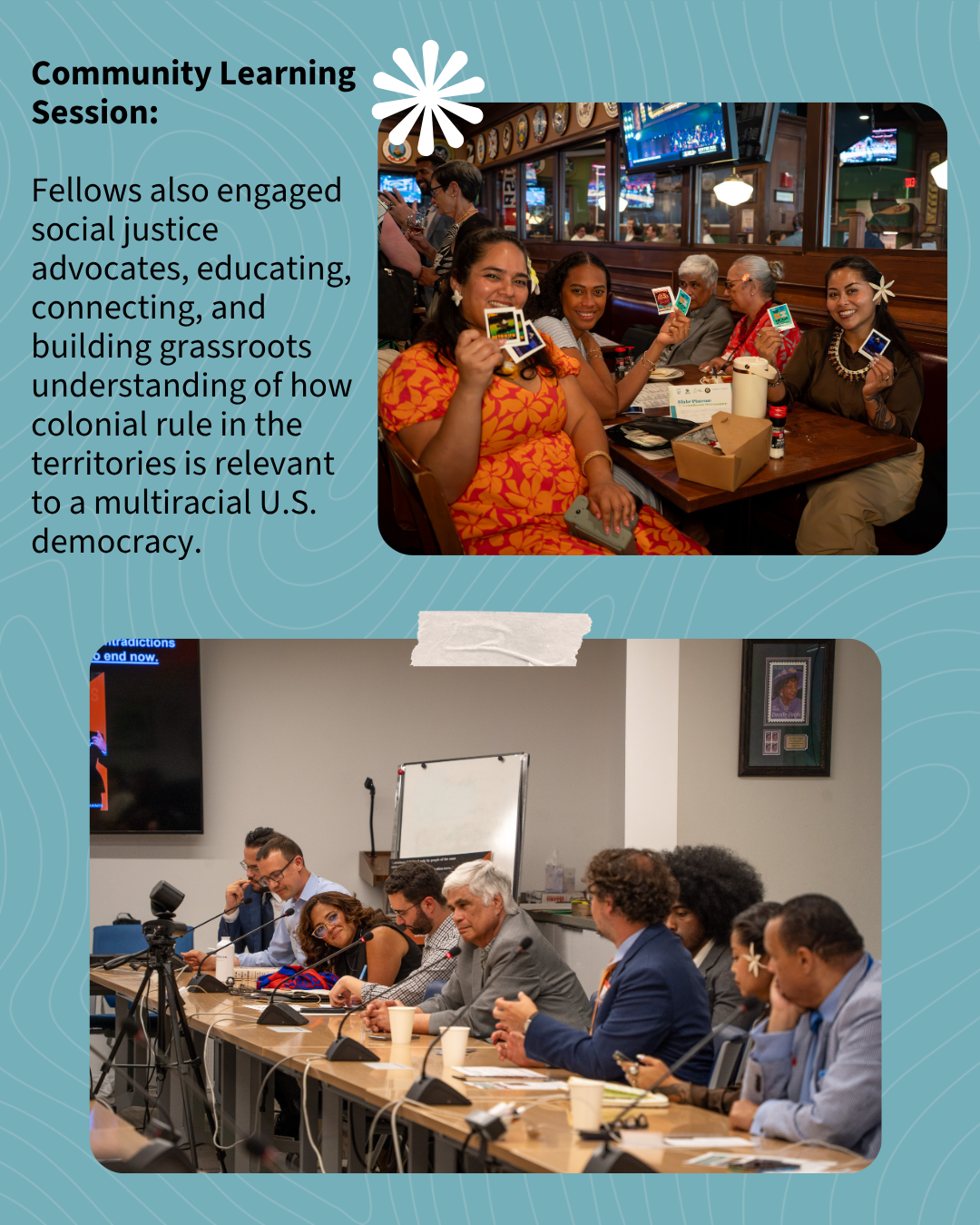
They have hosted dialogues with environmental leaders across all five U.S. territories to discuss the most pressing climate challenges facing their communities and identify practical, community-driven solutions. In addition, they convened conversations with artists on art as a vehicle for resistance and storytelling, including a public event at a museum in Guam. They also organized dialogues in Puerto Rico and the U.S. Virgin Islands with community leaders and students at a local college, creating space for collaboration.
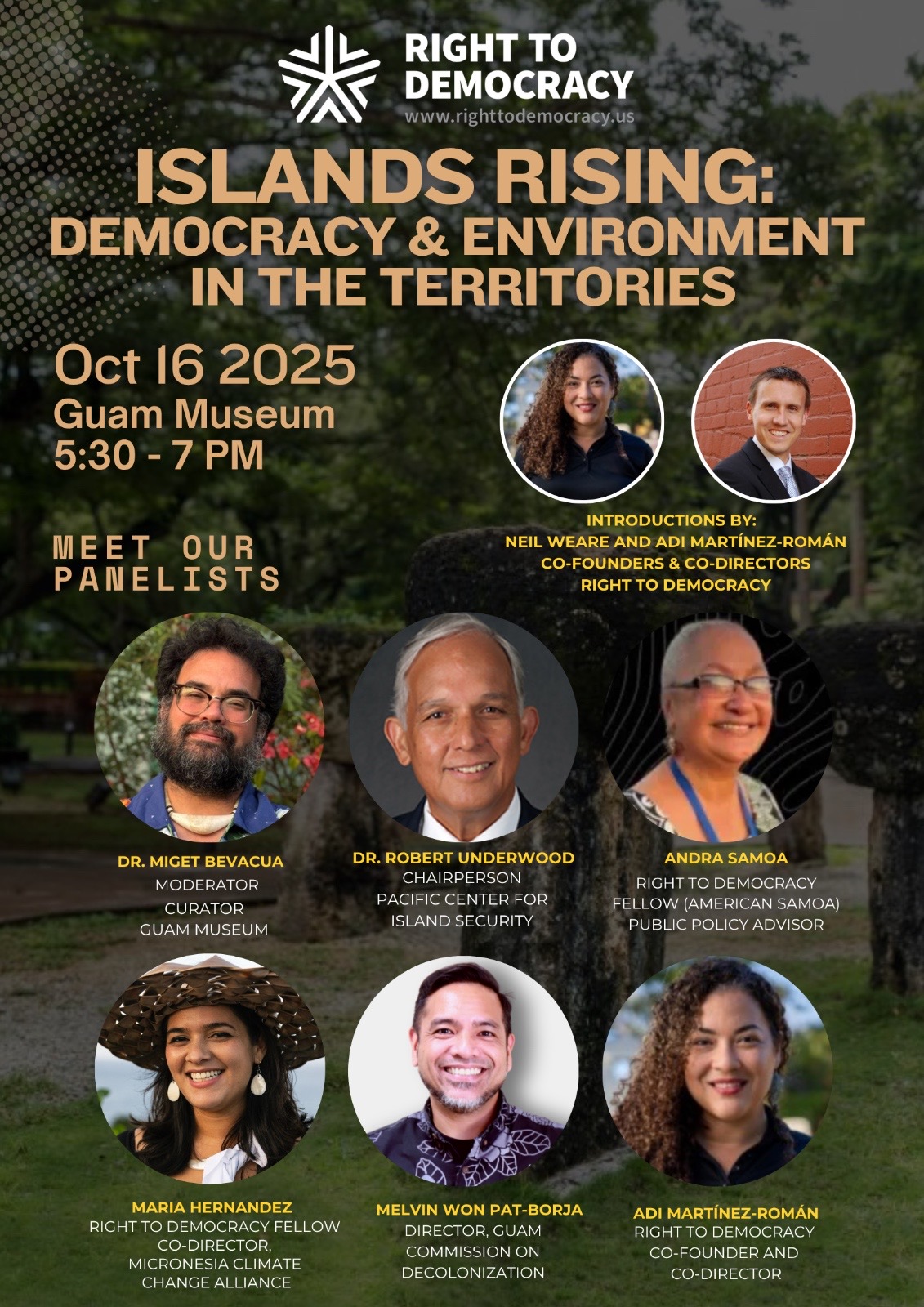
During our Pacific Listening Tour in American Samoa, Guam, and the Northern Mariana Islands, our Environment & Democracy Fellows didn’t just attend events; they organized and facilitated environmental listening sessions, bringing together chiefs, elected officials, environmental advocates, nonprofit leaders, and community members to surface urgent local priorities.
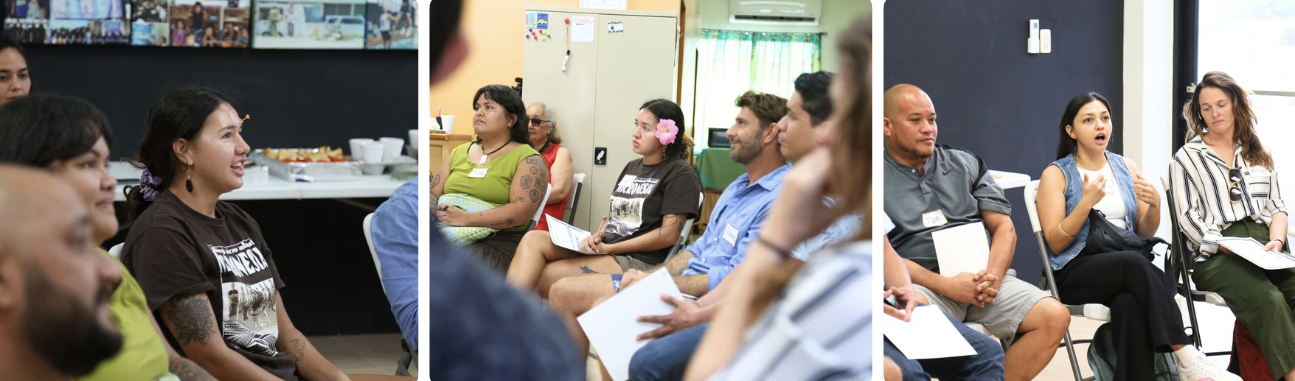
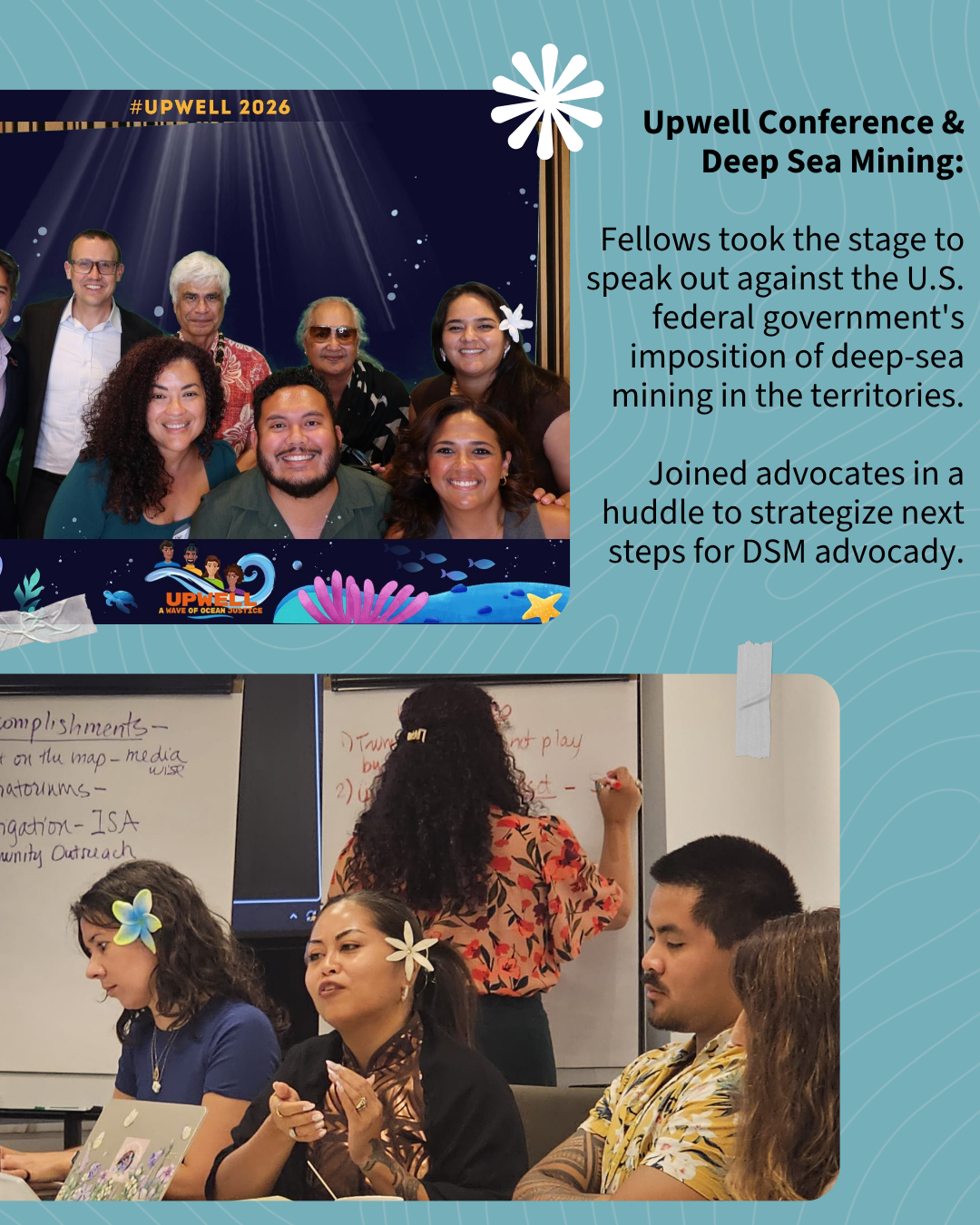
In American Samoa, they convened leaders to address deep-sea mining threats, commercial fishing authorizations near Rose Atoll, and the broader pattern of unilateral federal decision-making. In Guam, they created space for multi-generational environmental organizers to speak candidly about military expansion, water contamination, and the protection of sacred lands and marine ecosystems. In the Northern Mariana Islands, they gathered over a dozen environmental leaders to confront PFAS contamination, coastal erosion, food insecurity, and the unmet promises tied to the Covenant.
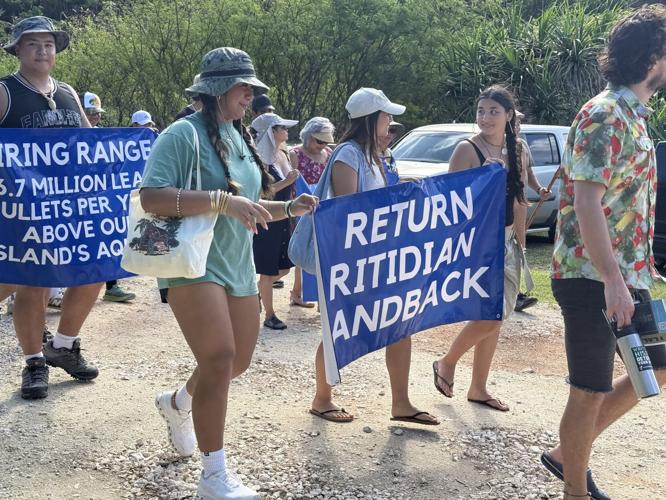
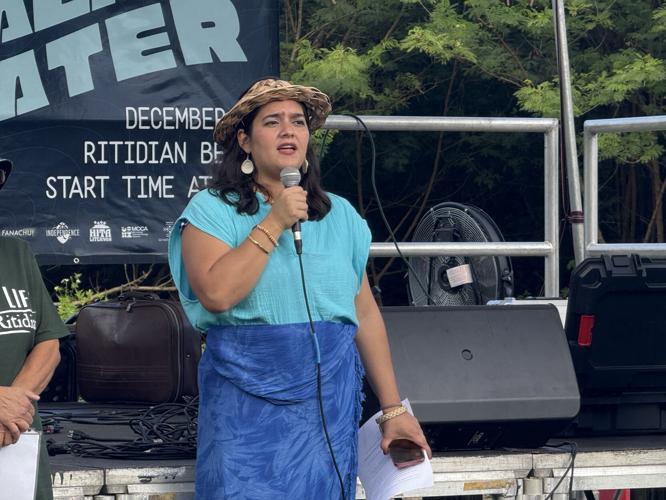
One of our fellows, Maria Hernandez, also helped organize the Walk for Water at Litekyan, bringing together nearly 200 community members to protect Guam’s aquifer, oppose the proposed military firing range, and advocate for the return of ancestral lands.
Policy Advocacy
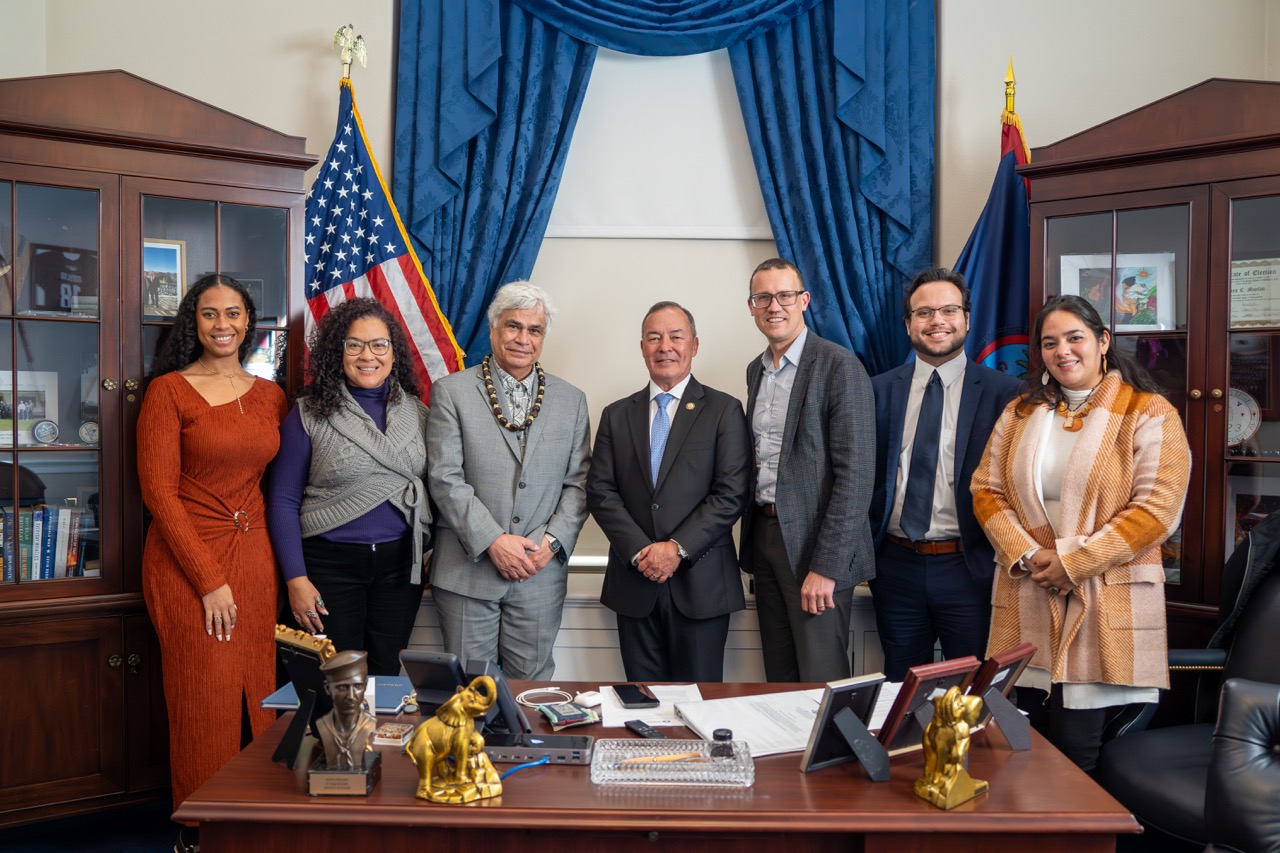
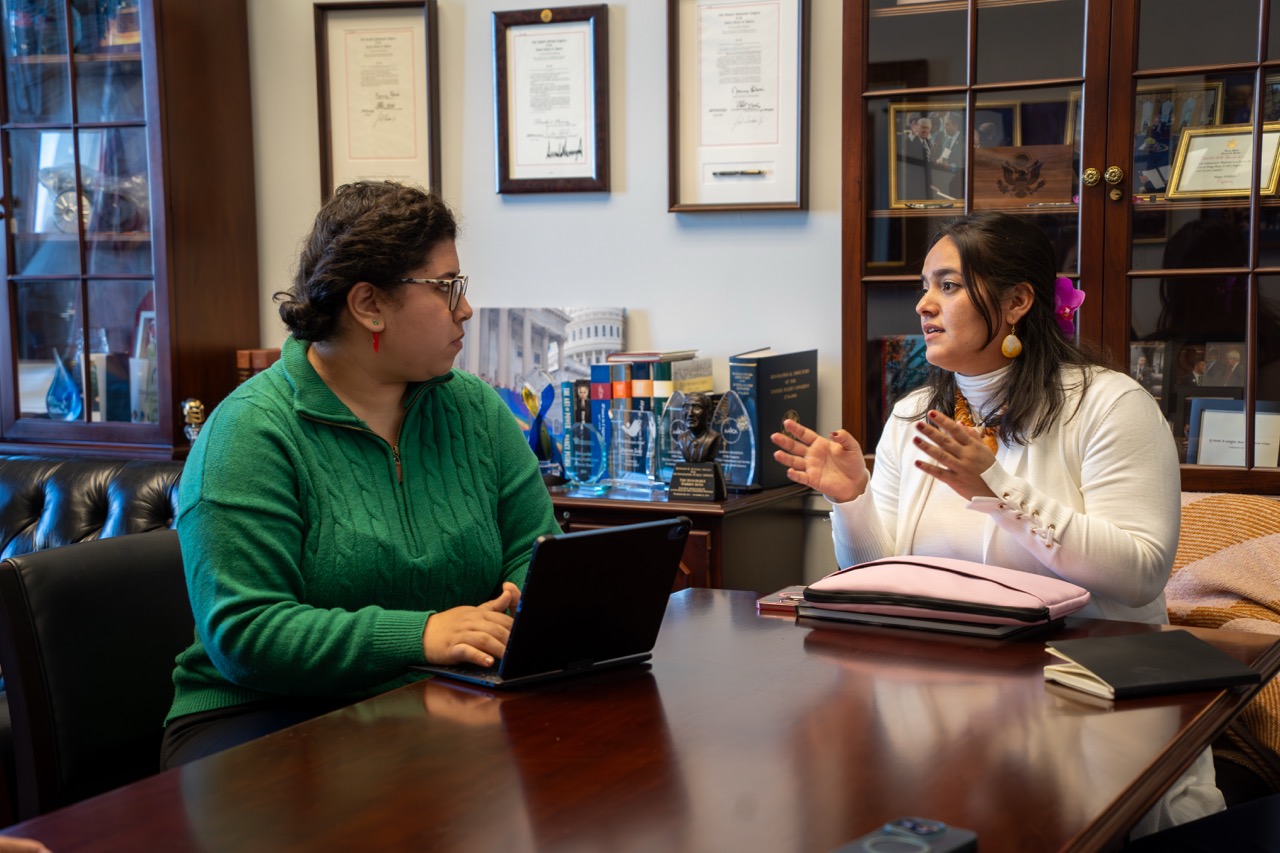
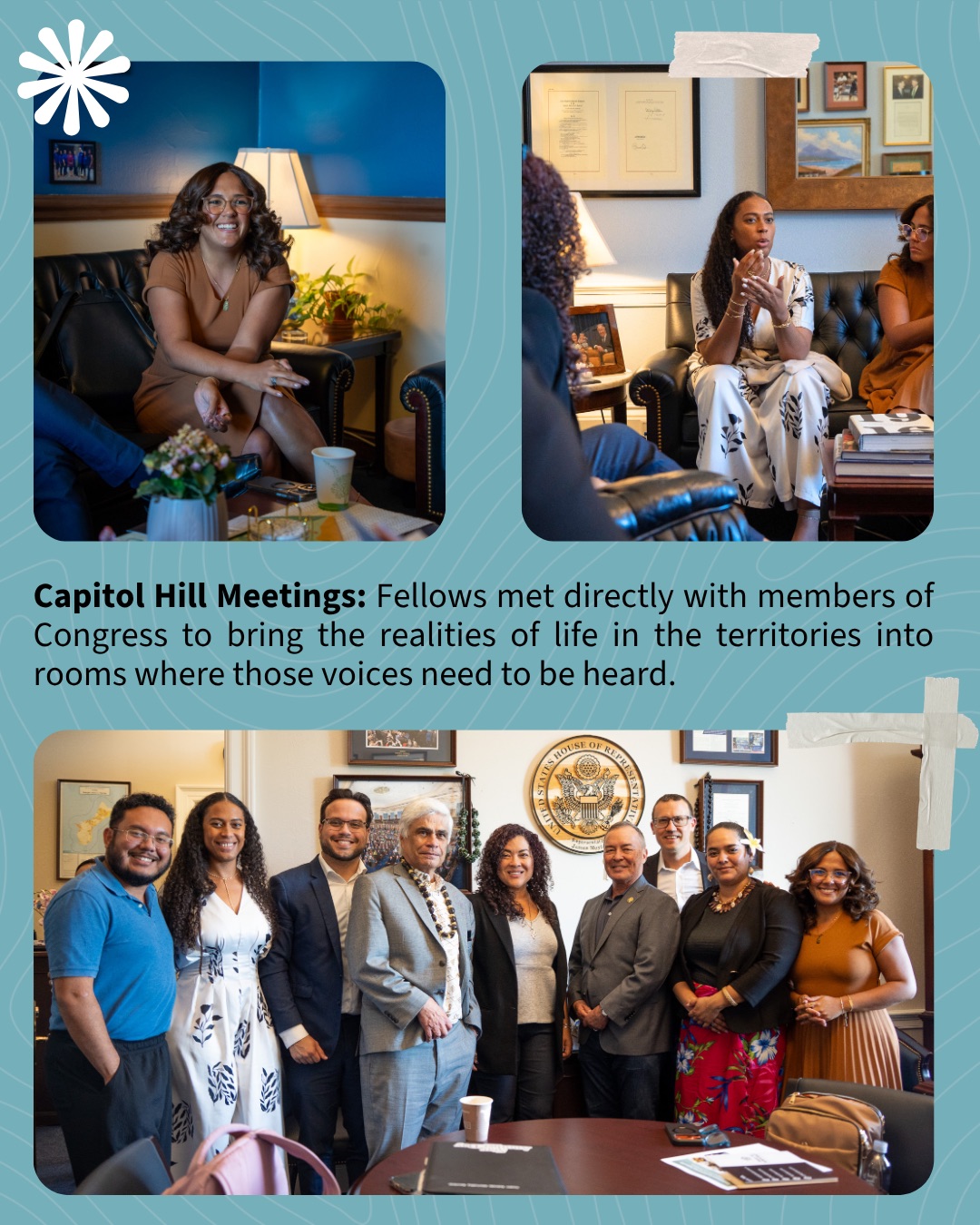
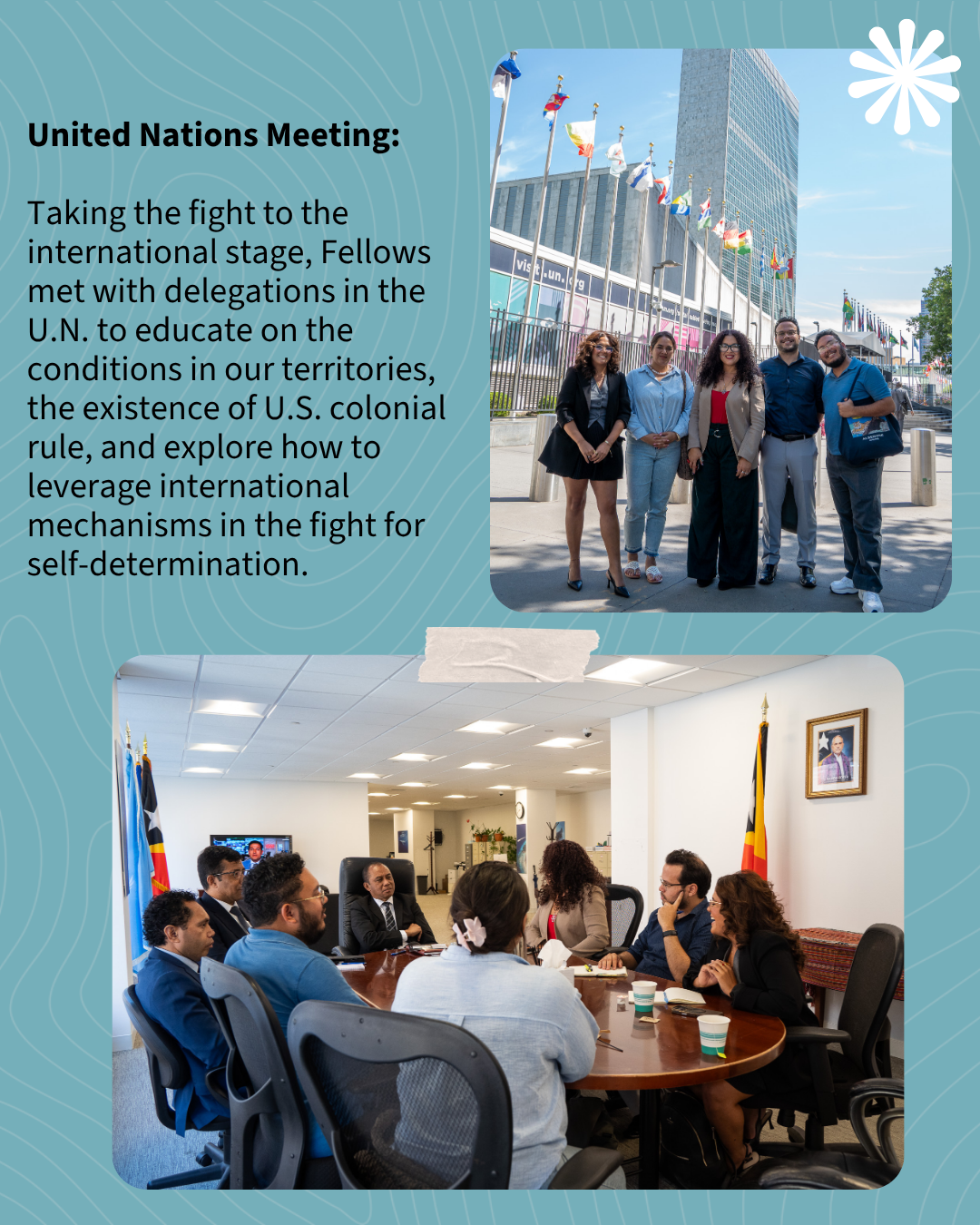
Fellows flew to Washington, DC, along with other Right to Democracy staff members, to speak directly with various US delegates about their experiences living in the territories and the environmental issues that the US federal government is directly allowing and/or enforcing without previous input from local communities. Some of the main topics were deep-sea mining imposition, the increase of militarization on protected lands, and food security.
Imposition of Deep Sea Mining
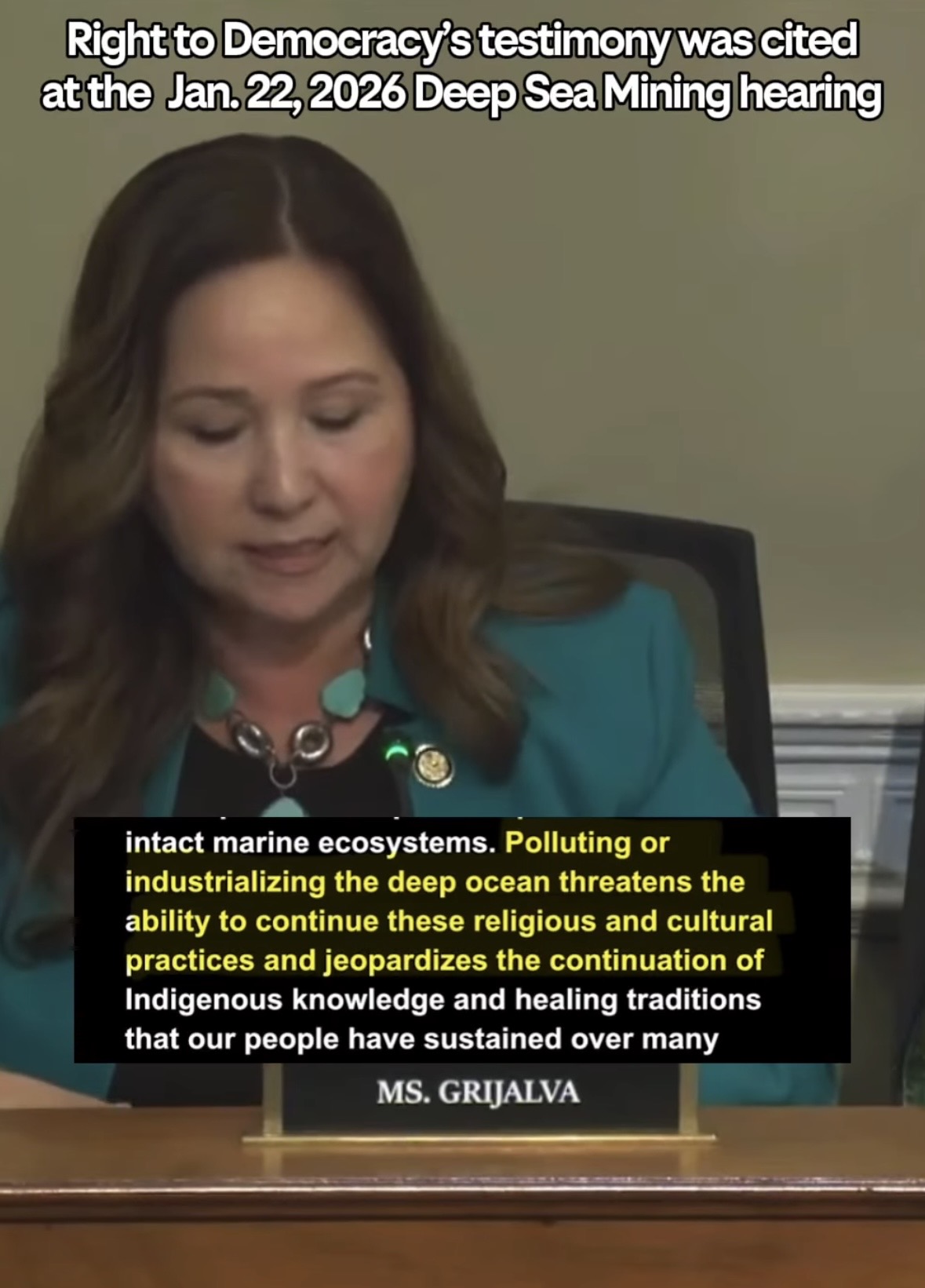
Fellows co-authored a cross-territorial testimony, “From the Marianas to American Samoa: Our ocean is not a sacrifice zone,” calling out unilateral federal deep seabed mining plans in American Samoa, Guam, and the Northern Mariana Islands. The testimony was later referenced by multiple delegates during the most recent official deep-sea mining hearing, demonstrating the growing impact of territorial voices in federal decision-making.
They also led a social media campaign that supported a cross-territorial advocacy campaign, helping communities across multiple territories submit over 60,000 petitions and public comments opposing deep-sea mining.
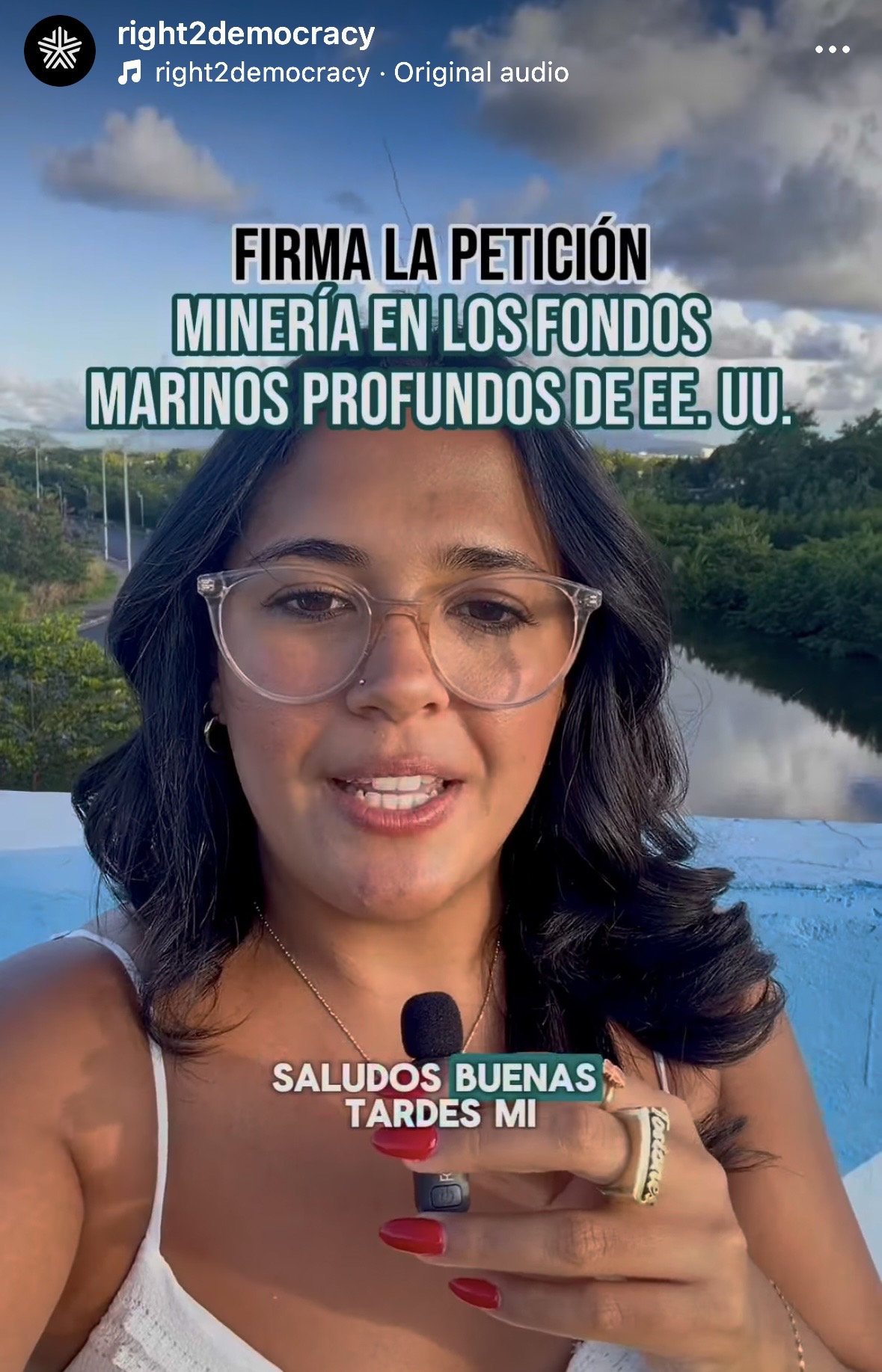
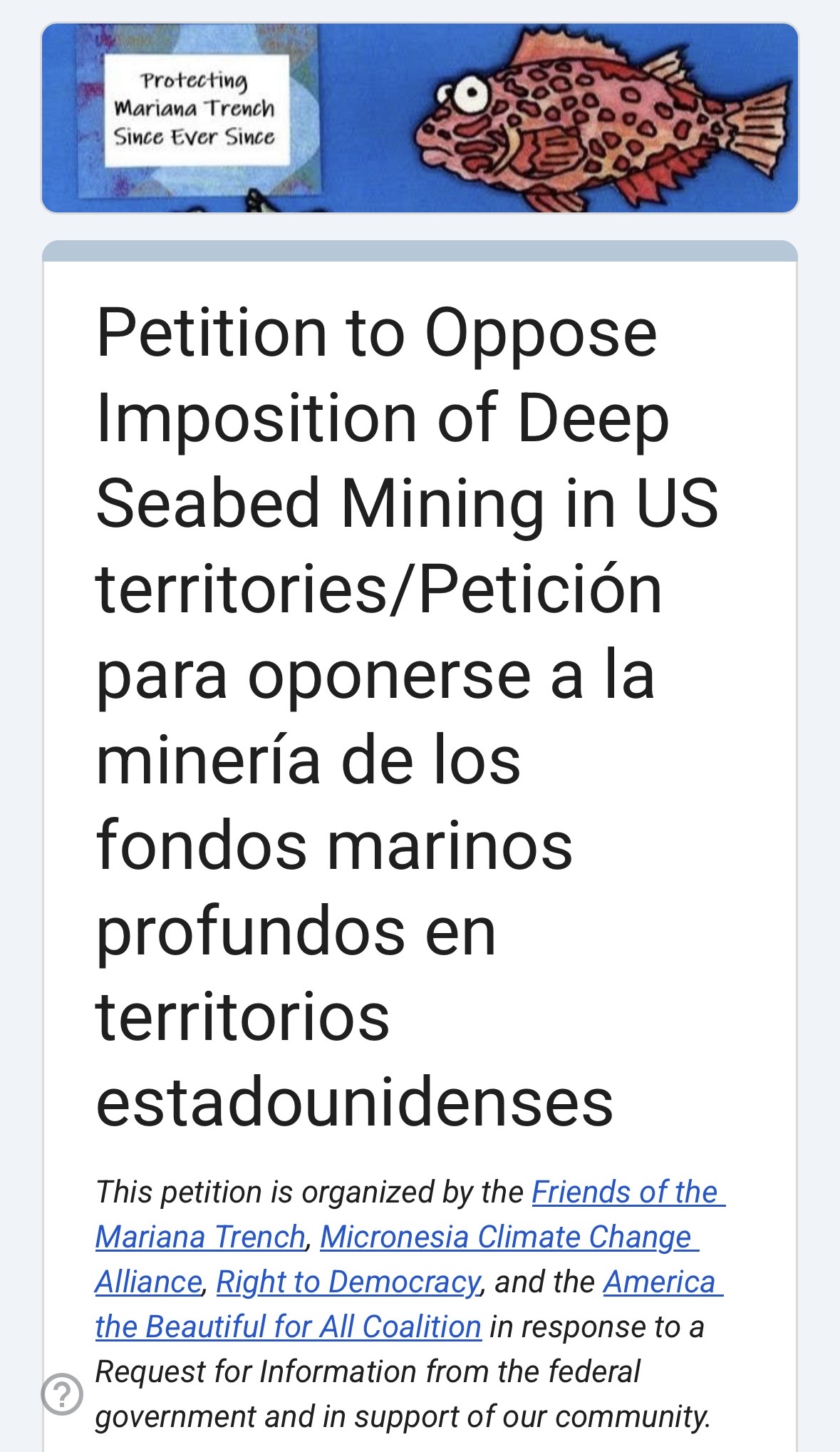
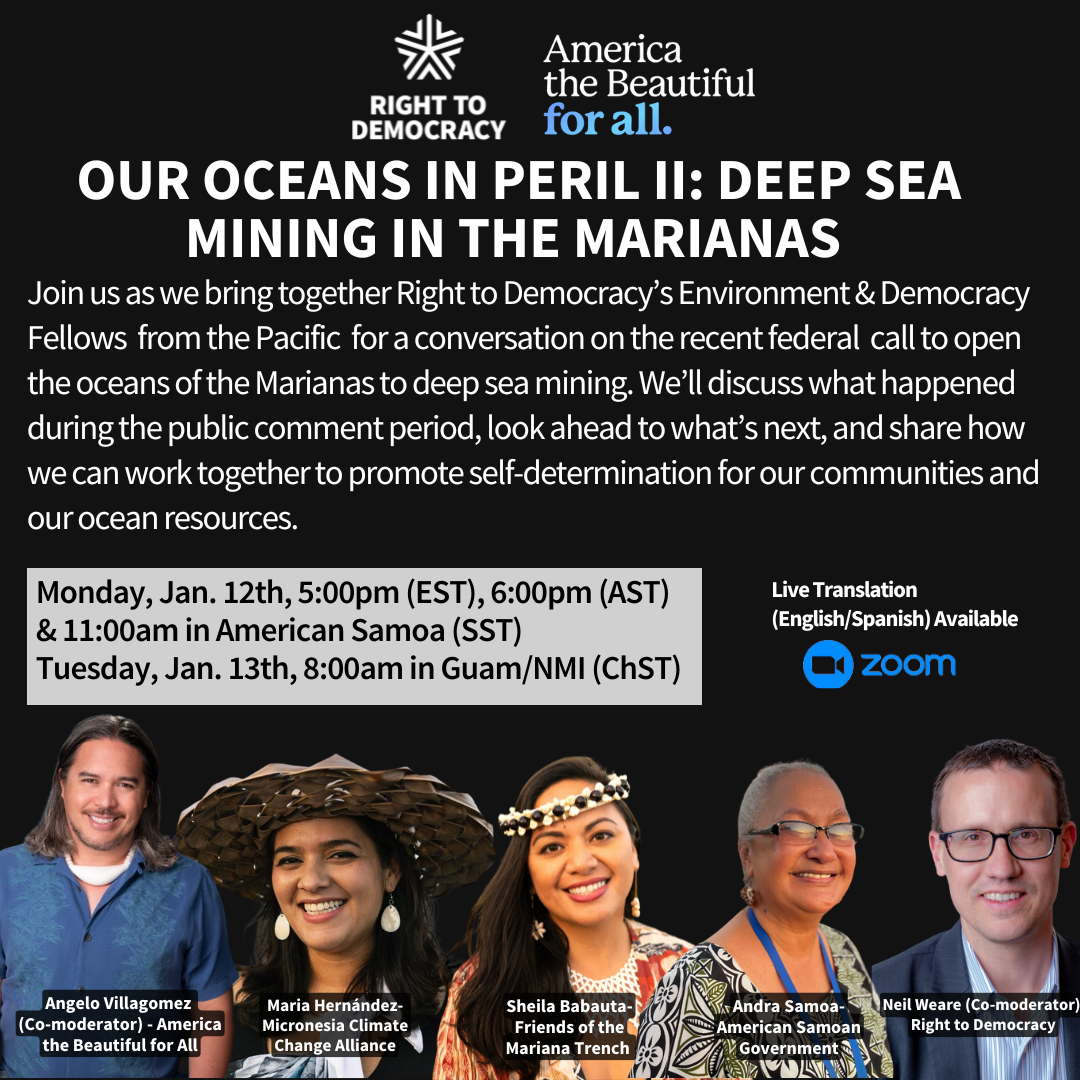
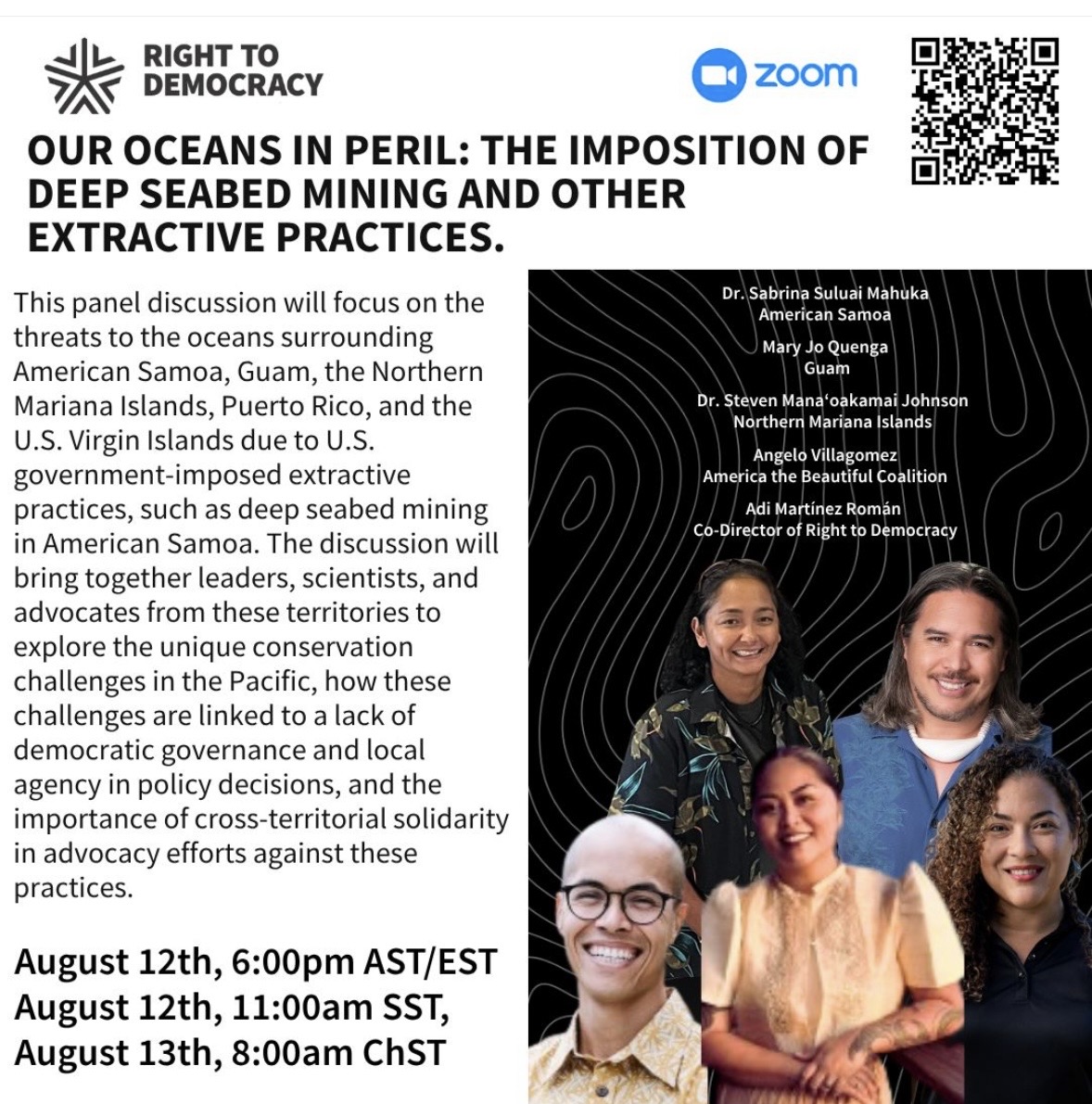
Besides in-person events, our fellows lead cross-territorial virtual conversations about timely environmental issues. Two of our most recent virtual panels have been regarding the imposition of deep-sea mining, specifically in American Samoa and the Northern Mariana Islands/Guam. Registration for these events is always free, and recordings are always posted on our YouTube channel here.
Fellowship Goals & Activities
Fellows were selected based on their demonstrated community leadership and commitment to environmental and climate justice in their home territories. Over the course of the fellowship, they will:
-
"Embed" with a local organization, helping to build capacity.
-
Develop participatory advocacy campaigns that address the dual legacies of ecological harm and democratic exclusion.
-
Participate in collaborative meetings and educational dialogues.
-
Contribute to a growing Cross-Territorial Coalition coordinated by Right to Democracy, which aims to bridge local and global efforts to ensure the lived realities of U.S. territorial residents are seen, heard, and addressed.
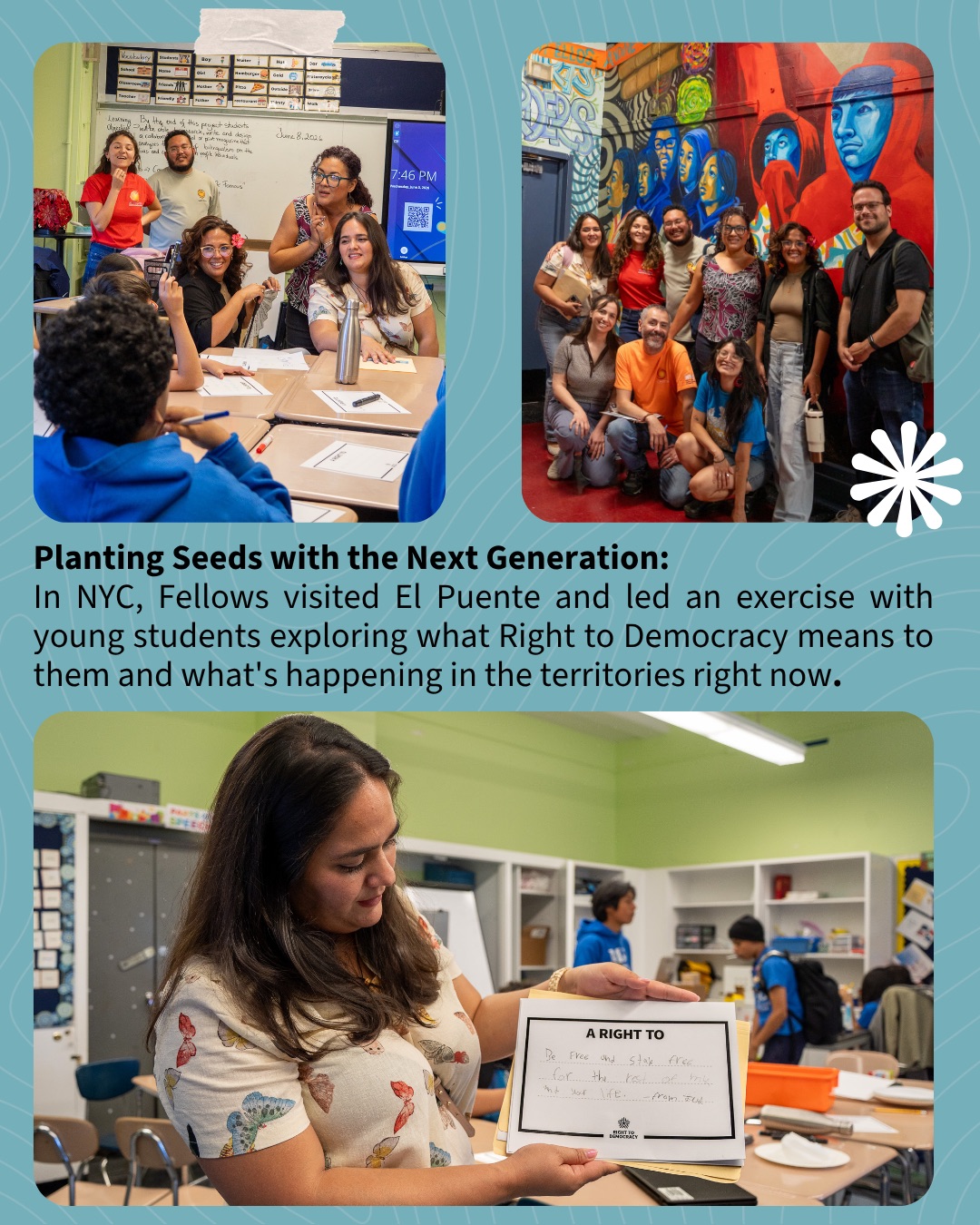
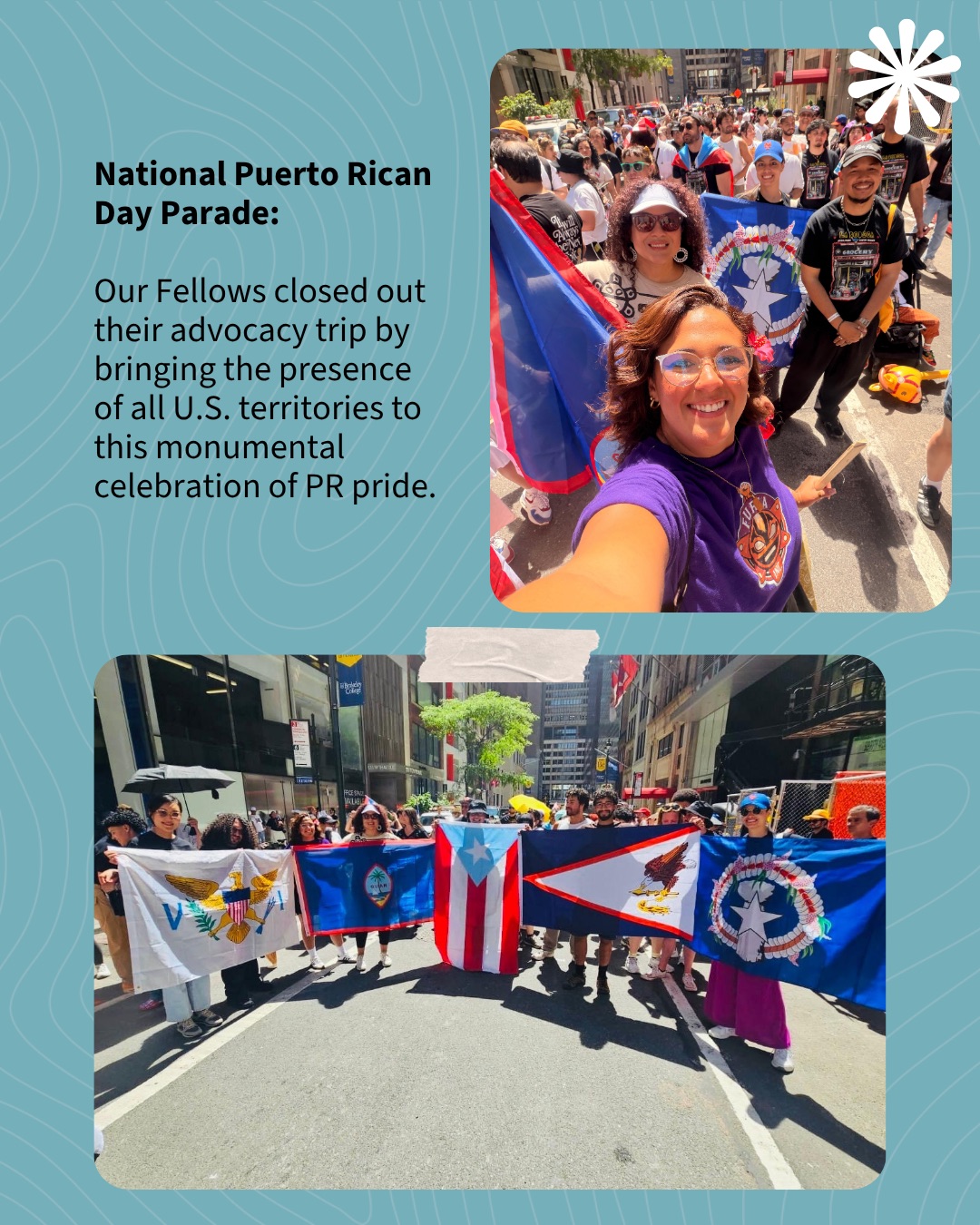
DC/NYC JUNE 2026 ADVOCACY TRIP
What the full Recap Video of our participation at the CENTRO Conference: A Sea of Islands (details below)



CENTRO Conference | A Sea of Islands - Recap Video
Do you like this page?