


Photo: Michael Pese, Tupe Smith, and their children in Whittier, Alaska. Photo Credit: Right to Democracy
Alaska v. Smith
STATUS: Dismissed without prejudice
COURT: Alaska Court of Appeals
OVERVIEW
Tupe Smith was born in American Samoa — a U.S. territory for over 125 years — and currently lives in Whittier, Alaska, a small town of approximately 250 residents. In 2023, after winning an election to her local school board with 96% of the vote, Alaska State Troopers arrived at her home and handcuffed her in front of her children. Her alleged offense: checking a box indicating she was a “U.S. citizen” on voter registration forms — a box she was directed to check by local officials, because no box for “U.S. national” existed.
Alaska pursued felony charges of perjury and voter misconduct against Smith and 10 other American Samoan residents of Whittier. The most serious charges carried a sentence of up to 5-10 years in jail.
On September 4, 2026, the Alaska Court of Appeals granted Tupe’s motion to dismiss, ruling that the state had failed to show any “consciousness of wrongdoing” or that she “purposely or deliberately” made “a false statement.” As a result of the Court of Appeals decision, Alaska’s Acting Attorney General Cori Mills dismissed all the charges against Tupe and the remaining American Samoan defendants.
The dismissal, however, was entered “without prejudice,” meaning the state can file new charges against Tupe or others in the future.
Right to Democracy was part of the legal team defending Smith in the Alaska Court of Appeals.
WHY THIS CASE MATTERS
The Fourteenth Amendment provides that “all persons born … in the United States … are citizens of the United States.” American Samoa has been a part of the United States since 1900, when its leaders signed Deeds of Cession transferring full sovereignty to the United States. American Samoans signed the Deeds of Cession with the expectation they would be recognized as full U.S. citizens. Those leaders were correct: so long as the people of American Samoa choose to continue being a part of the United States, anyone born there has a constitutional right to be recognized as U.S. citizens. No government official has the power to deny that, not Congress, not the President of the United States, not elected officials in Alaska or American Samoa.
The question for American Samoans to answer for purposes of self-determination is whether to continue being a part of the United States or not. So long as American Samoans choose to continue remaining part of the United States, people born there have a right to citizenship that cannot be denied them by any government official.
This prosecution is a direct consequence of 125 years of colonial rule where the United States has claimed full sovereignty and jurisdiction over American Samoa while imposing the second-class status of “non-citizen” U.S. national over the objections of those who signed the Deeds of Cession.
VOICES FROM THE CASE
“This was the lowest point of my life. I never thought I would go through something like this. Had Alaska issued me a summons like they did my husband and other family members, I would have shown up in court. There was no need to handcuff me in front of my kids.” — Tupe Smith
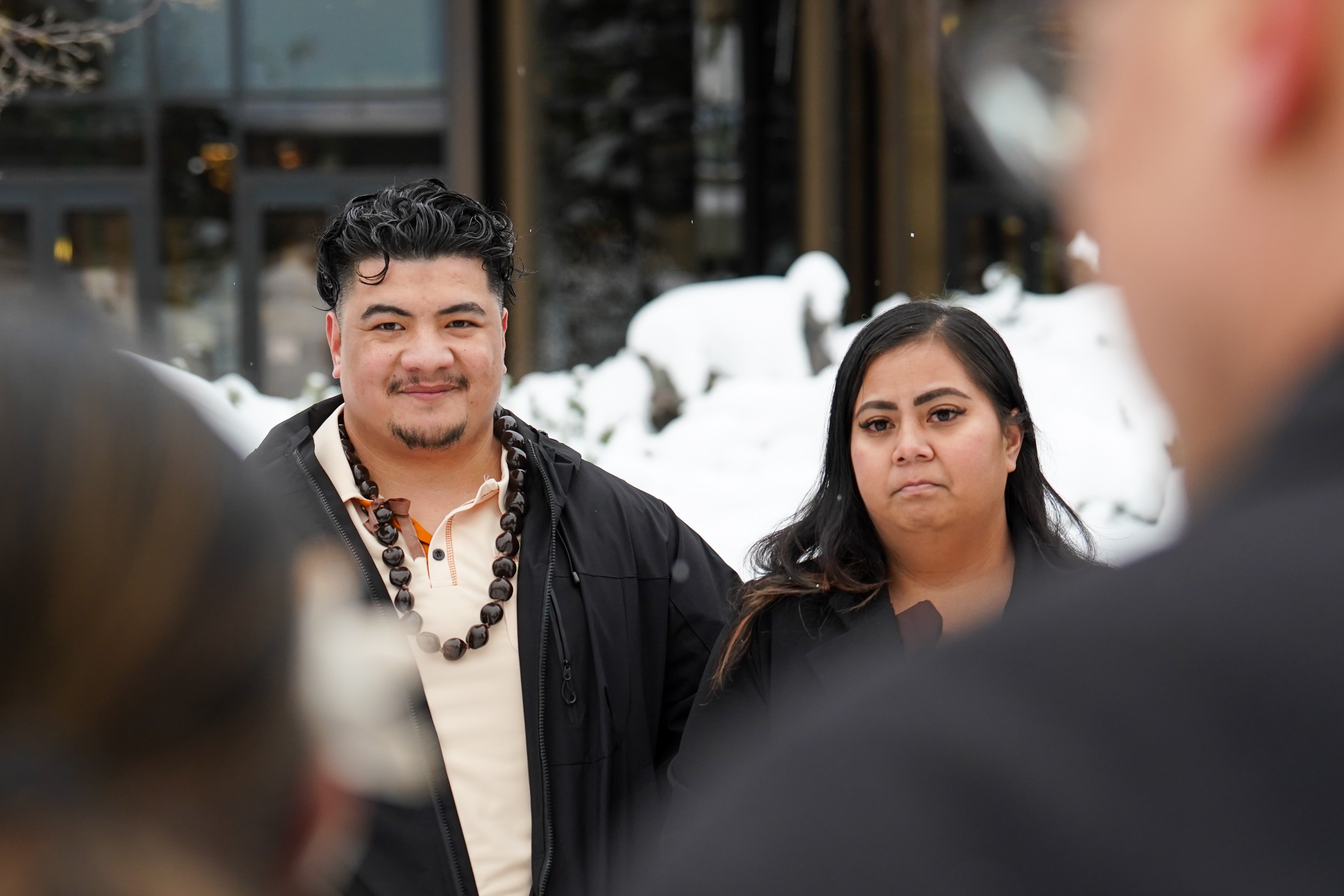
Tupe Smith (R) and her husband Michael Pese (L), Photo Credit Jeff Chen
“American Samoa has now been a part of the United States for more than half the existence of the United States itself. It is clearly ‘in the United States.’ The State of Alaska should follow the Constitution and stop prosecuting American Samoans born on U.S. soil,” –– Tafilisaunoa Toleafoa, Executive Director of the Pacific Community of Alaska
“Federal statutes that label American Samoans as ‘nationals but not citizens’ cannot be squared with the text and history of the Fourteenth Amendment, which guarantees U.S. citizenship to anyone born on U.S. soil. Federal, state, and local officials who have sworn an oath to uphold the Constitution must follow its command, not reflexively defer to a discriminatory federal statute.” — Neil Weare, Co-Director, Right to Democracy.
“Whether American Samoa is ‘outside of the United States’ or ‘in the United States’ is the key question - it is the difference between having a constitutional right to be recognized as a U.S. citizen and not having such a right. The answer should be clear - American Samoa has been a territory of the United States since the early 1900’s. Six generations born in American Samoa have owed their allegiance at birth to the United States of America. Generations of American Samoa’s sons and daughters confirmed their allegiance through their service in the U.S. Armed Forces at higher rates than any state.” — Charles Ala'ilima, American Samoan Attorney and co-counsel
CASE MATERIALS
Alaska Court of Appeals
- September 4, 2026 - Court of Appeals Opinion
- September 18, 2025 - Reply Brief, Tupe Smith
- July 30, 2025 - Respondent's Brief, State of Alaska
- May 31, 2025 - Petitioner's Brief, Tupe Smith
- May 31, 2025 - Amicus Brief of ACLU and ACLU Alaska
- February 5, 2025 - Order Granting Petition for Review
- January 2, 2025 - Response to Petition for Review, State of Alaska
- November 20, 2024 - Petition for Review, Tupe Smith
CASE UPDATES
Alaska v. Smith: Is Being Born in American Samoa a Crime?, Right to Democracy
NEWS COVERAGE
- Alex Burness, Bolts Mag, After a Yearslong Nightmare, Relief for American Samoans Punished for Voting, September 15, 2026
-
James Brooks, Alaska Beacon, Alaska appeals court judges appear skeptical about American Samoan voter misconduct case, January 16, 2026
-
Mark Thiessen, Becky Bohrer, AP, Alaska court weighs voter misconduct charges in case that casts light on status of American Samoans, January 15, 2026
-
Alex Burness, Bolts Mag/Alaska Beacon, Americans by Name, Prosecuted for Voting in Alaska, January 14, 2026
-
Guam Post, American Samoa Leaders Rally Behind Alaska Defendants As Citizenship, Voting Case Unfolds, January 6, 2026
-
The Associated Press, 10 Alaskans born in American Samoa plead not guilty in voting case highlighting citizenship issues, September 4, 2025
-
Anchorage Daily News, American Samoans indicted in Whittier voter fraud case as state pursues criminal charges, September 5, 2025
-
Alaska's News Source, Whittier Voter Misconduct Case: State moves forward with criminal indictments against 10 American Samoan residents, September 4, 2025
-
Native America Calling, Confusion Reigns with American Samoa Citizenship Status, July 4, 2025
-
ACLU Alaska, The Rules Around Voting For American Samoans Living in Alaska Are Confusing. The State of Alaska Should Fix the Problem, Not File Charges, June 11, 2025
-
Mark Thiessen, Becky Bohrer, and Gene Johnson, A U.S. territory's colonial history emerges in state disputes over voting and citizenship, Associated Press, June 7, 2025
-
Jonson Kuhn, Voter misconduct hearing follows solidarity event for 10 Whittier American Samoan family members charged in case, Alaska's News Source, May 2, 2025
-
Michelle Theriault Boots, Dozens rally to support American Samoans family in Whittier charged with voter fraud ahead of first court appearance, ADN, May 2, 2025
-
Liz Ruskin, Whittier case poses a larger question: Why can't these Americans vote?, Alaska Public Media, May 2, 2025
-
Victoria Petersen, Misinformed by election officials, American Samoans in Alaska now face prosecution, Alaska Current, May 1, 2025
-
Charles Ala'ilima and Neil Weare, Alaska's Election Administration a Trap for American Samoans, April 19, 2025
-
Jonson Kuhn, ‘We were targeted’: Whittier Samoan residents who are U.S. nationals claim state troopers asked for immigration status, Alaska’s News Source, October 8, 2024.
-
Jonson Kuhn, Whittier voter misconduct case: 11 American Samoans still waiting for ruling on whether charges proceed to trial, Alaska’s News Source, February 18, 2026.
ADDITIONAL RESOURCES:
- Alex Burness, Bolts Mag/Alaska Beacon, Americans by Name, Prosecuted for Voting in Alaska, January 14, 2026
- The Associated Press, 10 Alaskans born in American Samoa plead not guilty in voting case, highlighting citizenship issues, September 4, 2025
- Neil Weare, When the Supreme Court let a president get away with redefining birthright citizenship, SCOTUSblog, March 26, 2026
Do you like this page?