
 Right to Democracy
A new educational series by Right to Democracy offers an opportunity to look back at American Samoa’s history as the federal government moves forward with proposals to open waters around American Samoa to deep seabed mining. What is happening in American Samoa today is not just about mining. It is about history, power, and who gets to decide.

“Largely missing from the current debate over seabed mining in American Samoa is any real historical examination of American Samoa’s relationship with the United States,” says Ken Aiono, a Radio Samoa host who serves as the moderator in a new educational program Fa’a Samoa, Sovereignty, and Self-Determination in American Samoa: Past and Present. The program is part of Right to Democracy’s new Building Understanding Series, which examines how the history of each U.S. territory can help people better understand the present. “As American Samoans celebrate 125 years as part of the United States, history should serve as a guide to understanding what that relationship means in people’s day-to-day lives.”
The current debate over seabed mining in American Samoa raises critical questions:
- If American Samoans stand together in opposition to seabed mining in the waters off of American Samoa, can the Secretary of Interior decide to allow it anyway?
- If the Secretary of Interior decides to sell off these mineral rights to the highest bidder, will American Samoans share in the profits, or only the risks?
- What weight is the Secretary of Interior giving to the environmental, cultural, and economic consequences of seabed mining?
- Most importantly, what say do American Samoans have in any of this?
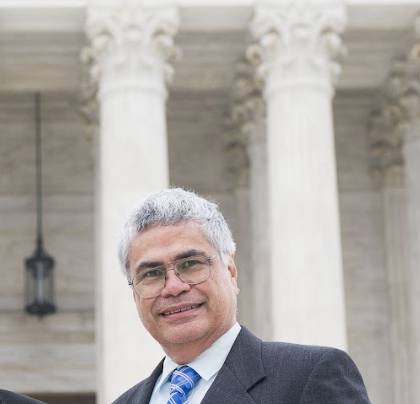
“To know where we stand today, we must understand how we got here,” says Charles Ala’ilima, an expert on American Samoa’s legal history who is the program’s featured guest. “With public comments on the federal government’s seabed mining proposals due Wednesday, July 16th, understanding our past and present relationship with the United States is more important than ever. If we are to chart our own future, we must grapple with our past.”
American Samoa: Past and Present examines key treaties, federal laws, court decisions and other historical documents that have shaped and continue to shape American Samoa’s political and cultural landscape. It traces the historical arc from pre-Western frameworks of Samoan society to the arrival of Christianity and Western influence, how the U.S. claimed sovereignty over American Samoa through the 1899 Tripartite Convention and the Deeds of Cession, how U.S. Naval rule transitioned to expanded self-government, and what this all means for the nature of American Samoa’s relationship with the United States today. The program then looks at how American Samoa’s history informs current controversies related to the Department of Interior’s consideration of seabed mining in American Samoa and Alaska’s criminal prosecution of American Samoans based on federal laws that designate them as “non-citizen” U.S. nationals.
Joining Ken Aiono and Charles Ala’ilima are Right to Democracy Co-Directors Adi Martínez Román and Neil Weare, who share how the historical experiences of other U.S. territories can provide important context to American Samoa’s relationship with the United States.

“The goal of our Building Understanding Series is to gather and share in-depth information on the historical development of each territory as a tool to foster shared learning—within territories, across them, and throughout the United States as a whole,” said Martínez Román, who lives in Puerto Rico. “We each have so much to learn from each other to better understand our own relationship with the United States.”
As part of its Building Understanding Series, Right to Democracy will make original historical documents related to American Samoa and other U.S. territories available online to make these sometimes hard-to-find resources more accessible.

“There are many misconceptions and myths that exist out there. Our hope is that by focusing on original historical documents, people can do their own research and reach their own conclusions,” said Neil Weare, who grew up in Guam. “Whether someone knows little or nothing about U.S. territories, or if they want to learn more about their own stories and history, the Building Understanding Series will help close important knowledge gaps.”
“We cover a lot of ground and hopefully address a lot of questions people may have,” said Charles Ala’ilima, who also serves on the Board of Right to Democracy. “But we’d like to hear what other information people would like to know more about. We also hope people will share this educational program with their friends, family, or other settings.”
American Samoa: Past and Present is available online at righttodemocracy.us or on social media @right2democracy. The public is invited to share their questions and comments to [email protected], which will be addressed in a future program. Right to Democracy will focus on other U.S. territories in future segments of the Building Understanding Series.
Right to Democracy is a non-profit organization that works to advance democracy, equity, and self-determination in U.S. territories.
***
- Part I Addresses American Samoa’s history prior to Western contact, contested understandings of the 1899 Tripartite Treaty and the 1900/1904 Deeds of Cession, the legal framework established by the U.S. Supreme Court in the Insular Cases, the Mau Movement’s push for self-government and U.S. citizenship during the 1920s-40s, Navy rule from 1900-1951, and more.
Watch Part 1 here!
- Part II Examiens the post World War II decolonization movement, the transition from Navy rule to appointed civilian government, developments in local self-government, the American Samoan Constitution, and what this all means for the nature of American Samoa’s relationship with the United States. Turning to the present, it focuses on how American Samoa’s history informs current debates around the imposition of seabed mining and Alaska’s prosecution of American Samoans based on their designation as so-called “non-citizen” U.S. nationals.
Watch Part 2 here!
More historical resources focused on American Samoa will be posted in the future.
Do you like this page?